
Montenegro's Environmental Setback: The Ongoing Struggle to Keep Up with Europe's Recycling Standards
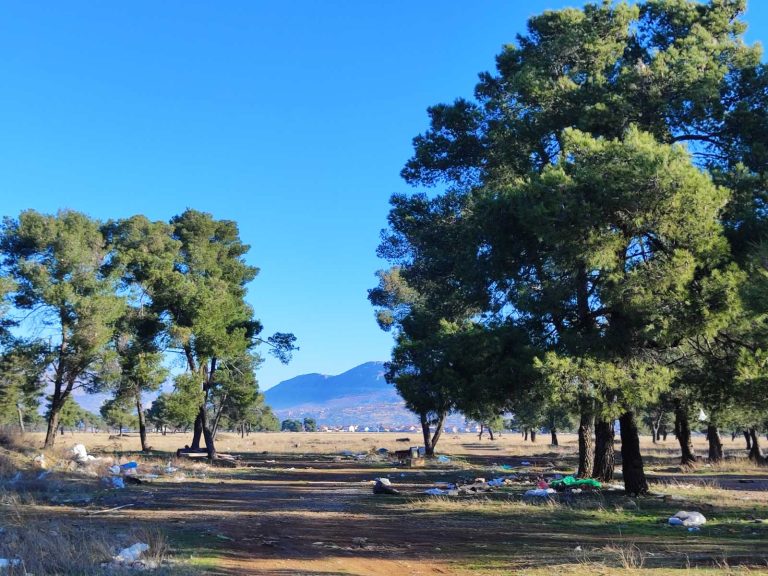
Montenegro has over 300 uncontrolled landfills, and most municipalities fail to implement recycling or waste separation practices. Alarmingly, the situation has worsened over the past decade. Every year, millions of euros are wasted, and the environment continues to suffer from increasing pollution.
Andrea Perišić
"For the past two years, I've been collecting every plastic and glass bottle, hoping to find a place where I can ensure they'll be properly recycled," an interviewee from Podgorica shared with the Center for Investigative Journalism of Montenegro (CIN-CG). She is among the few who actively separate waste in the household.
Montenegro has only 13 recycling centers, located in Podgorica, Herceg Novi, and Kotor. In 2019, a mobile waste container was introduced in the capital, and more recently, recycling machines have been installed in some areas.
In the recycling yard located in Zabjelo, Podgorica, various containers are designated for different types of waste: electronic and electrical items, paper and cardboard, glass, tires, aluminum cans, PET packaging, plastic, white goods, bulky metal waste, fluorescent tubes, batteries, eco-waste, and waste oil. Nearly everything is recyclable here except textiles.
However, few people use these recycling yards. The containers are often half-empty, with some barely containing anything, such as the one for electronic waste, which holds only a handful.
Most people are unaware of these recycling yards, and recycling efforts are poorly promoted. The issue lies in the fact that the centers in Podgorica are situated in locations that are not easily accessible to most of the population.
Since these recycling yards are used voluntarily, they are primarily utilized by environmentally conscious citizens. Waste separation should be mandatory and implemented at the source, directly from door to door. This would make the system more accessible and convenient, which is key to its success and achieving good results. Only then can we expect higher rates of separate waste collection and recycling," representatives from the NGO Zero Waste Montenegro stated to CIN-CG.
According to the NGO, once the infrastructure for waste separation is in place, it is crucial to focus on education and raising awareness about recycling and proper waste management.
The lack of awareness about the importance of recycling is clearly reflected in the situation, which has worsened compared to a decade ago, when Montenegro began negotiations with the European Union (EU), where waste management was one of the key topics.
"This is the fourth year without a State Waste Management Plan, and as a result, there are no local plans either. In a sense, waste management in Montenegro is happening in an unmanaged, 'natural' way," Ivana Vojinović, director of the Center for Climate Change, Natural Resources, and Energy at the University of Donja Gorica (UDG) says to CIN-CG.
According to her, no waste prevention plans have been implemented at the local level, despite being a requirement of European legislation and a crucial first step in fostering a recycling culture.
The country loses tens of millions of euros annually, if not more, while the environment suffers due to the lack of recycling and waste separation.
As part of its EU accession negotiations, Montenegro is required to recycle at least 50 percent of municipal waste by 2030. However, in 2022, the country recycled less than half a percent. This is highlighted in the Report of the Statistical Office of Montenegro (Monstat), published at the end of last year. In 2022, approximately 336,000 tons of municipal waste were produced, with just over 1,000 tons being recycled.
According to Monstat data, in 2022, Montenegro generated 1.412 million tons of waste, of which approximately 20 percent were classified as hazardous. Additionally, the average resident produced 544 kilograms of waste annually, or roughly 1.5 kilograms per day.
Landfill and Recycling Ltd, from Podgorica, which manages the recycling center, informed CIN-CG that in 2023, 560 tons of municipal waste were recycled. The materials sorted include cardboard, paper, iron, aluminum cans, plastic bags, PET packaging, and mixed plastics.
Moving Backwards Instead of Forward
As Montenegro recycled less than half a percent of its waste in 2022, the country is regressing rather than progressing in its EU negotiations. In 2021, recycling rates were around two percent, similar to 2020 and 2019. Interestingly, Montenegro recycled more in 2013, when EU negotiations first began, than it has in recent years.
The Strategy for Waste Management in Montenegro until 2030 only provides data on waste composition for 2013. That year, approximately 244,000 tons of municipal waste were generated, including about 32,000 tons of paper, 29,000 tons of plastic, 20,000 tons of glass, and 13,000 tons of PET packaging.
According to the current price list from the Podgorica company "Landfill and Recycling Ltd." the purchase price for old newsprint and office paper ranges from 20 to 60 euros per ton, depending on the grade and type. Plastic is priced at 25, 30, or 50 euros per ton, while PET packaging is valued between 80 and 250 euros per ton. If these materials were recycled, Montenegro could save millions of euros, which currently end up in illegal or poorly managed landfills. At the lowest prices, recycling paper alone could generate around 650,000 euros, recycling plastic could bring in 725,000 euros, and PET packaging could yield over a million euros.
In the Report on the Implementation of the State Waste Management Plan for 2013, it was stated that in most municipalities, containers for the primary selection of municipal waste (paper, cardboard, metal, plastic, glass) were installed, but that the collection of selected fractions is not done separately. Still, the containers with selected and mixed waste are emptied simultaneously, and the selected part then ends up in one of the mixed landfills.
CIN-CG contacted all municipalities in Montenegro and found that most do not implement separate waste collection despite local authorities' decisions to do so.
"We were unable to implement the decision due to personnel and technical limitations," stated the "Communal Activities" department in Šavnik to CIN-CG.
Other municipalities have expressed the same concerns.
"Waste recycling has never been implemented in Žabljak, although we do have a facility that was used for sorting waste, not recycling, even during its operational period," officials from the Office of the President of the Municipality of Žabljak told CIN-CG.
Cetinje lacks a facility for recycling and sorting mixed municipal waste, and the existing planning documentation does not include plans for its construction.
"Mixed municipal waste collected by LLC 'Municipal Services' Cetinje is transported daily from the municipality to the regional sanitary landfill 'Livade' in Podgorica, where it is sorted in a dedicated facility," the Office of the Mayor of the Capital City Cetinje told CIN-CG.
The municipality confirmed that there is no recycling center in Andrijevica and that no funding is available for its construction.
According to the Plav municipality, starting in 2021, Plav began recycling paper, PVC waste, cardboard, and glass using dedicated presses.
Local authorities in Herceg Novi say the decision on separate waste disposal is only partially implemented due to low awareness among residents. They also highlight that non-compliance with the Waste Management Law is one of the major challenges for recycling.
Meanwhile, the proposal for this law was adopted by the Parliament of Montenegro at the end of last year. It addresses the management of waste from single-use plastic products and plastic-containing fishing gear, among other issues.
Improper Waste Disposal in Podgorica: Mixed Waste Found in Dry Fraction Bins
Municipal Service from Podgorica also confirmed that separate waste collection has yielded minimal results to CIN-CG. They explained that the system was initially designed with three bins (for paper, plastic, and metal), later reduced to two bins (for dry and wet municipal waste fractions). However, the crucial element of waste separation at the source, specifically in households, was lacking. As a result, the bins are predominantly filled with mixed municipal waste.
In mid-January of this year, the company monitored the unloading of a truck emptying containers designated for the dry fraction of waste to assess the content of the collected material. The analysis revealed that citizens were not correctly using the container for the dry fraction, despite prominent labels and numerous appeals through the media. Instead, they are disposing of mixed municipal waste in it.
"This confirms that citizens are not embracing this waste disposal system. Given that changing habits is challenging, we believe implementing a penalty policy would be the quickest way to address non-compliance with waste management rules," the company stated.
The Office of the Mayor of Cetinje explains that no effective, incentivizing pricing policy is in place. Companies providing municipal waste collection services could offer discounts to households that separate recyclable waste generated within the home.
Montenegro Lacks a Landfill for Hazardous Waste and Has No Plans to Build One
"A woman from Podgorica, researching pesticides, told CIN-CG, that the company for sanitary and environmental protection "Hemosan" Ltd. Bar the only one licensed for proper hazardous waste disposal, wanted to charge me around 100 euros, plus VAT, for transporting two small pesticide packages from Podgorica to Bar and storing them—services I was hoping to dispose of.'"
In the end, despite the pesticides being classified as hazardous waste, she had no choice but to dispose of them in a regular container.
Unfortunately, it's not uncommon for irresponsible individuals to leave waste outside containers, including dangerous materials.
Montenegro lacks a designated landfill for hazardous waste, and there are no plans to establish one in the current State Waste Management Plan for 2015-2020 or the draft plan for 2023-2028.
For years, in the Konik settlement of Podgorica, in Ćemovsko Polje and behind the landfill, irresponsible individuals have been setting fire to tires in order to extract and sell the wire. These fires have often spread uncontrollably. The burning of tires releases dioxin, a highly toxic pollutant that, according to the World Health Organization (WHO), can cause reproductive and developmental issues, weaken the immune system, disrupt hormones, and lead to serious diseases, including cancer.
For decades, the government has failed to find an effective solution to address this problem.
Medical waste, various types of batteries, and accumulators continue to be disposed of recklessly.
In Montenegro, the planned opening of the Brskovo mine near Mojkovac raises concerns, as the potential consequences of the waste generated there have been overlooked. If mishandled, the waste from the mine, which could contain mercury and other heavy metals such as cadmium and arsenic, poses a significant risk to both the environment and the health of Montenegro's residents.
Kotor is the Only City Separating Paper, Plastic, Glass, and Metal for Recycling
By the time this investigation was published, CIN-CG had not received responses to several questions from other municipalities. However, the 2022 Report on the Implementation of the State Plan for Waste Management in Montenegro, released at the end of last year, reveals that municipalities such as Bijelo Polje, Danilovgrad, Gusinje, Pljevlja, Ulcinj, Tuzi, Rožaje, Petnjica, Berane, Budva, and Bar do not have separate waste disposal systems in place.
The situation is somewhat better in Herceg Novi, Kolašin, Kotor, and Tivat, where bulky and green waste are collected separately, and compost bins are used to process significant amounts of green waste. A composting plant is planned for four municipalities—Kotor, Herceg Novi, Budva, and Tivat—but its capacity is limited, meaning it currently only processes waste from the city of Kotor.
These data indicate that the municipalities of Andrijevica, Berane, Bijelo Polje, Žabljak, Danilovgrad, Nikšić, Gusinje, Pljevlja, Plužine, Cetinje, Rožaje, Ulcinj, Šavnik, Petnjica, and Tuzi have not separated any waste for recycling.
The other municipalities included in the report—Bar, Mojkovac, Budva, Podgorica, Kolašin, Tivat, and Herceg Novi—separate at least some paper, glass, plastic, and metal for recycling. However, Kotor stands out by preparing all these materials for reuse, processing about a thousand tons of waste.
"The recycling issue is deeply systemic, as many local governments struggle to manage the waste they generate. At the state level, there are no clear guidelines outlining who is responsible for the complex waste collection, sorting, and recycling process. Additionally, there is little incentive to change the status quo, as recycling is not currently a competitive alternative to traditional waste disposal," Ivana Vojinović explains.
As she explains, to make the recycling system effective, the work of inspection authorities must be enhanced.
"Montenegro needs to improve its recycling rate, which is currently one of the lowest in Europe. Adopting European standards would transform how we manage waste, leading to more household bins, better waste disposal planning, and the procurement of specialized bins and bags. This approach, which has long been established in many countries, would foster a recycling culture still in its early stages in Montenegro," Vojinović says.
CIN-CG contacted the communal police of several municipalities to inquire about the number of fines issued for improper waste disposal from 2018 through the end of last year. Only the municipalities of Pljevlja, Budva, and Kotor responded.
Only three fines, ranging from 30 to 1,000 euros, were issued for this offense in Pljevlja, all of which were imposed on individuals. "In many cases, it was impossible to identify the perpetrator," Pljevlja Communal Police stated.
In Budva, 354 misdemeanor orders were issued, totaling 65,470 euros, for improper waste disposal, mostly near container stations and along local and main roads. "The municipality of Budva has not had a designated waste disposal site for five years, as required by planning documents, which complicates enforcement," representatives of the Budva Municipal Police stated. They noted that illegal dumping typically occurs in the evening, when fewer communal inspectors are on duty, with frequent violations reported in areas such as Jaz, Topliški Put, Markovići, Stanišići, Reževici, Bečići, Paštrovska Gora, and Buljarica.
According to the Kotor Inspection Service, 15 individuals were fined 7,500 euros, while 16 legal entities were penalized with fines totaling 22,000 euros.
Waste Management Crisis in Nikšić: No Plan in Sight Despite Rising Pollution
Nikšić lacks a system for separate municipal waste collection and recycling, making it the only municipality in Montenegro without a plan for managing municipal and non-hazardous construction waste for years.
"They clearly don't understand their priorities," activist Ivana Čogurić says.
"The Gračanica River has been turned into a landfill along its entire course. Instead of addressing this environmental issue, they are focusing on the reconstruction of bridges over the river, which, according to experts, are in excellent condition," Čogurić from the "Ecopatriotism" movement highlights.
She emphasizes recognizing waste as a resource and suggests street recycling machines to encourage citizens to recycle beyond their homes. "This way, people could receive money for recycling cans and bottles immediately."
Recently, Podgorica installed recycling machines in five locations where citizens can exchange plastic bottles (PET) or cans for food for homeless dogs. A similar initiative exists in Kotor, where citizens can "buy" food for street cats by recycling plastic bottles, a symbol of the city.
The Nikšić Municipality's Secretariat for Communal Affairs and Traffic told CIN-CG they have prepared a Draft Local Plan for managing Communal and Non-Hazardous Construction Waste. They also reported that technical documentation for building a recycling yard is in progress, along with a draft decision on the municipality's separate collection and disposal of communal waste.
Europe Recycles Over 50% of Municipal Waste
According to data from the Draft State Waste Management Plan for the period from 2023 to 2028, in 2020, Montenegro recorded over 300 illegal landfills. The highest concentration of these uncontrolled dumpsites is in Bijelo Polje, which accounts for 106.
For years, the European Commission (EC) has repeatedly warned that little progress has been made in waste management, and that Montenegro's national legislation is only partially aligned with EU standards.
According to the European Environment Agency (EEA), nearly all European countries, except Sweden, have significantly improved their municipal waste recycling rates since 2004. Countries like Germany, Austria, Slovenia, the Netherlands, Denmark, Belgium, Luxembourg, Switzerland, and Italy recycle up to 50% or more of their municipal waste.
Finland and Sweden recycle about 40% of their waste, while Poland recycles even more.
However, some countries, such as Cyprus, Malta, Turkey, and Romania, still recycle less than 20% of their waste. Croatia recycles about 30%, Bosnia and Herzegovina around 20%, and Serbia approximately 15%. All of these countries outperform Montenegro in waste recycling.

Leave a Reply

 English
 Facebook
 Youtube
 X (Twitter)
 Instagram
2023, Centar za istraživačko novinarstvo CG - Sva prava zadržana