
Controversies in the Draft Spatial Plan of Montenegro: Fostering Conflicts Rather Than Solutions for Nature Protection
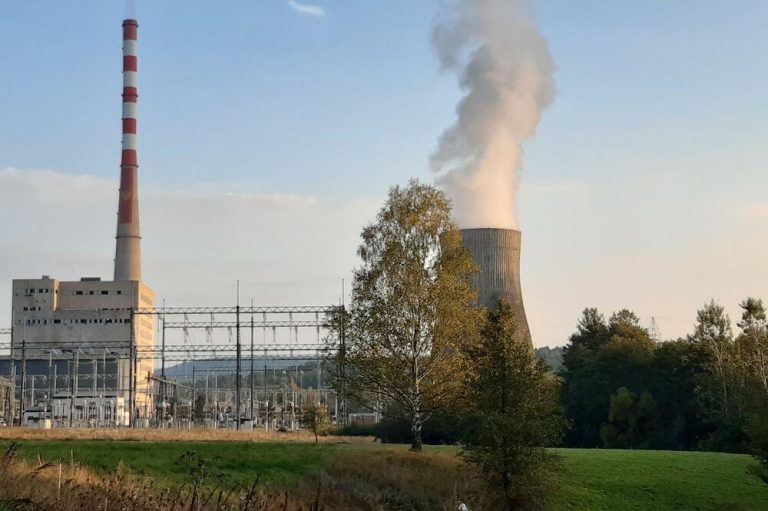
The strategic impact assessment sharply critiques several proposals in the Draft Spatial Plan of Montenegro, highlighting their failure to adequately consider protected areas, sustainable development, and society's genuine needs. Issues persist with problematic solutions, including the dam on Komarnica and the military training ground on Sinjajevina.
Maja Boričić
The Strategic Impact Assessment (SIA) of the Draft Spatial Plan of Montenegro until 2040 warns that the construction of hydropower plants on the Komarnica and Piva rivers would irreparably harm biodiversity, habitats, and the landscape. Despite these warnings from the non-governmental sector and segments of the professional community, the Plan still allows for the possibility of building these hydropower plants.
The government of Dritan Abazović adopted the Draft Spatial Plan of Montenegro in the final weeks of its mandate. Initial reactions indicate that the Plan contains numerous controversial provisions, which could intensify debates over the future management of the region and the direction in which Montenegro should develop.
The newly established Ministry of Spatial Planning, Urbanism, and State Property, led by Janko Odović, has not responded to multiple inquiries from the Center for Investigative Journalism of Montenegro (CIN-CG) concerning the Draft Spatial Plan.
Hydropower Plants: Komarnica, Krusevo, and Boka
The Draft Spatial Plan includes proposals for the Komarnica hydropower plant, the Kruševo HPP, and the Boka HPP along the coast. These areas are classified as Emerald sites, potential UNESCO World Heritage extensions, and regional park zones.
Experts consulted by CIN-CG argue that these projects should be removed from the Plan.
While the Komarnica HPP is technically the most advanced, it faces significant opposition due to its environmental impact and lack of support from institutions responsible for environmental protection. The draft plan mentions this issue but offers no clear resolution.
The document also states that Montenegro's domestic power plants can currently meet most of the country's electricity needs, with imports now accounting for less than 10% of total consumption—a shift driven by the closure of the Kombinat Aluminum Plant (KAP) in Podgorica.
Nataša Kovačević from CEE Bankwatch highlights a UNESCO decision that obligates Montenegro to carefully assess the potential impacts of the Komarnica HPP on the Dragišnica and Komarnica Nature Park. If the project results in negative environmental effects, it must be rejected.
Kovačević also points out that international spatial planning practices typically include clear decisions on whether certain areas, particularly protected or sensitive zones, should be excluded from projects.
The Draft Plan's Strategic Impact Assessment identifies the proposed hydropower plants as clearly conflicting with nature protection goals. Despite this, the Plan leaves the Komarnica HPP proposal unresolved without a definitive stance from the state.
Regarding the Kruševo HPP, the Assessment highlights its location within the Dragišnica Komarnica Nature Park, noting a direct conflict with the park's preservation and Montenegro's Nature Protection Law. Experts suggest that alternative locations should be considered.
The Boka HPP is deemed "completely unacceptable" in the draft plan, due to its potential to release large volumes of freshwater into the Risan Bay. This could disrupt the natural balance of the marine ecosystem, especially given the nearby protected areas of Sopot and Dražin vrt, which are set to receive permanent protection by the end of the strategic assessment process. Additionally, the transfer of such a large volume of freshwater from Lake Bileća would severely disrupt the natural balance of the marine ecosystem in this section of the bay.
Andrijana Mićanović from the Montenegrin Society of Ecologists (CDE) warns that the continued push for outdated projects, such as these hydropower plants, reflects a failure to evolve beyond the mindset that prevailed when the last Spatial Plan was created.
She argues that Montenegro is pushing projects that have long been abandoned in developed countries, while disregarding recommendations from the European Union (EU), UNESCO, the Berne Convention, and various other agreements the government has signed. "If we are planning the destruction of areas like the Komarnica River canyon, which is recognized and protected nationally and internationally, it clearly shows that we lack a coherent vision for our country's development," Mićanović explains.
The Strategic Impact Assessment further highlights that many proposed locations for energy sector development directly conflict with nature protection and the preservation of biodiversity-rich areas.
The document emphasizes that "insufficiently clear guidelines for land use allow concession contracts to be signed first, only to recognize conflicts with nature and environmental protection later. This is a long-standing issue in Montenegro that must be addressed."
Thermal power plant "Pljevlja"
In its annual report on Montenegro, the European Commission (EC) highlights the lack of focus on environmental standards in energy infrastructure projects and the lack of progress in finding alternative energy solutions.
The report emphasizes that Montenegro must strategically decide to replace the Pljevlja Thermal Power Plant, which currently generates about 50% of the country's electricity but remains the leading polluter.
The EC further assesses that the ecological reconstruction of the Pljevlja Thermal Power Plant (TE Pljevlja) does not address the fundamental issues, urging Montenegro to accelerate efforts to close the plant permanently. "Montenegro must plan a just transition by providing economic alternatives to communities most affected by the coal phase-out," the report states.
Despite numerous environmental concerns and Montenegro's international commitments on greenhouse gas emissions, the report notes that the expensive reconstruction of the Pljevlja TPP has continued.
Nataša Kovačević, coordinator for decarbonization in the district heating sector of the Western Balkans, points out that the draft spatial plan ensures the uninterrupted operation of the Pljevlja TPP, with no clear indication of a plan to phase out coal. According to Montenegro's international obligations, this should happen by 2035 or potentially earlier, given the financial burden from continued coal burning.
Kovačević stresses that renewable energy sources and energy efficiency must be prioritized in Montenegro, but these projects should be implemented in line with the "do no significant harm" principle.
She adds that, based on the draft plan's priorities, developers have not considered Montenegro's future EU membership by 2040 and the binding decarbonization regulations that will accompany it. Additionally, the Plan includes short-term coal mining projects in Pljevlja (Mataruge, Glisnica), which could endanger the region's sole water source.
Kovačević also notes the lack of clear guidelines for decarbonizing the heating sector, even though air quality in cities such as Podgorica, Nikšić, and Pljevlja is critically poor, primarily due to heating-related combustion.
She emphasizes the need for precise demographic data from the new census, a detailed national and energy climate plan, and clear timelines for phasing out fossil fuels to achieve net-zero emissions by 2050, in line with the just transition roadmap.
In conclusion, Kovačević argues that the draft plan requires significant revisions before it can be subject to public debate and that it is unlikely to be ready by the end of this year.
SINJAJEVINA
The draft document still fails to address some of the most significant conflicts that arose during the discussion of the Spacial Plan concept, including the proposed military training ground on Sinjajevina, the construction of a wind power plant on Brajići, and the high-speed road corridor in the costal region.
The Draft Plan suggests that Sinjajevina could be used as a temporary military training ground and for agricultural purposes.
However, the strategic impact assessment recommends relocating military exercises outside of Montenegro, arguing that "Montenegro is a mosaic of areas with exceptional natural value and is too small to afford the 'luxury' of sacrificing any part for military exercises, which would have a significant negative impact on biodiversity, habitats, and the lives of people who traditionally stay in the mountains in summer."
Nevertheless, the Draft Plan notes that the Interdepartmental Working Group (IDWG) report indicates artillery exercises would occur two to three times a year, lasting up to 10 days, during periods when local agriculture is inactive. From October to May, the military would use the area for training activities that did not involve artillery.
"The army will not build permanent facilities on Sinjajevina, but will use temporary ones, such as tents and containers. Once the activity is complete, the area will be rehabilitated," states the IDWG report.
The report further clarifies that artillery fire would impact only about nine square kilometers of the 74.5 square kilometers designated for the Military Shooting Ground on Sinjajevina.
According to the IDWG report, the Government decision allows the Ministry of Defense temporary use of the Sinjajevina area, with the possibility of revocation if expert agencies identify environmental risks.
In the Municipality of Žabljak, the revision of the Draft Spatial Plan proposes declaring Sinjajevina a regional nature park to protect and promote the area for agricultural and tourism purposes only. The representative from Žabljak emphasizes that this would prevent the construction of military facilities and activities, which could lead to the complete degradation of the mountain.
Nataša Kovačević argues that having a military training ground in Sinjajevina is incompatible with the area's traditional agricultural practices. She points out that the Plan designates Sinjajevina as a potential nature park, noting that it is also an Emerald area and a critical bird habitat (IBA).
Kovačević warns that the military training ground will likely be established if the decision is left to the defense sector: "Military activities would displace shepherds and tourists from a large part of the mountain."
BRAJIĆI
The Draft Spatial Plan includes plans for constructing the Brajići wind farm, spanning the municipalities of Budva and Bar.
However, in its revision of the draft Plan, the Municipality of Bar points out that the Detailed Spatial Plan for the wind farm states explicitly that the area is unsuitable due to low wind conditions.
The Municipality of Budva is particularly opposed to the project, arguing that building a wind farm at Brajići would permanently damage an area rich in natural springs, cultural and historical landmarks, and rural residential structures.
Ornithologist Bojan Zeković from the Center for the Protection of Birds (CZIP) warns that the wind farm would significantly threaten birdlife. He explains that Montenegro has two primary bird migration corridors: one passing through the Bojana River delta and Lake Skadar, with a high concentration of raptors moving through Bjelopavlići to Nikšić polje, and the other along the coastal mountains of Orjen, Lovćen, and Rumija.
Zeković notes that out of 19 Griffon Vultures, four were spotted near the proposed wind farm location. The Egyptian vulture—a species recently reintroduced to Montenegro after nearly three decades—also passed through the Brajići area. He adds that Brajići is home to several endangered raptor species, including the striped eagle, which no longer nests in the area but still follows migratory routes through the region.
TRAFFIC
The Draft Spatial Plan of Montenegro no longer includes constructing the Virpazar port. However, the potential development of a waterway along the Bojana River—connecting Lake Skadar to the Adriatic Sea—remains on the table.
The Strategic Environmental Assessment (SEA) stresses that Lake Skadar, a protected RAMSAR site and National Park, must not be subjected to nautical traffic development, particularly without clear regulations regarding the size and number of vessels.
In addition, the Draft Spatial Plan explores the possibility of constructing new airports in Ulcinj, Bar, Berane, Nikšić, Pljevlja, and Žabljak.
The SEA recommends re-evaluating these proposed locations. It specifically warns against building an airport in Ulcinj due to its proximity to the Ulcinj Saltworks, a protected site of international importance for bird species.
"It is important to note that the Ulcinj Saltworks constitutes over 30 percent of the criteria for closing Chapter 27 in the EU accession negotiations," the SEA emphasizes.
The proposed airport in Ulcinj would be located in the hinterland of Velika plaža, an ecologically sensitive area with unique species and habitats. The SEA argues that the construction of key transport routes such as the Bar–Boljare and Adriatic–Ionian highways will significantly improve access to the Ulcinj Riviera, eliminating the need for an airport.
The Center for Protection and Research of Birds (CZIP) has previously warned that Gornji Štoj, the proposed airport site, is the most important nesting ground for the bee-eater, a legally protected bird species. Developing airport infrastructure in this area would destroy its habitat.
CZIP Executive Director Jovana Janjušević told CIN-CG that the Draft Spatial Plan 2040 contains numerous dangerous and problematic proposals, which, if implemented, would mark Montenegro's environmental downfall.
She also criticized placing an airport near the Ulcinj Saltworks, highlighting its crucial role in meeting ecological benchmarks required for EU membership.
"If aircraft—one of the biggest polluters—are considered part of a plan to reduce CO2 and other climate-impacting emissions, then perhaps we should pave over Gornji Štoj entirely and replace the colorful birdlife with a 'hectic' airport," Janjušević stated sarcastically.
The Draft also suggests a controversial "high-speed road" along the coast, including a bridge crossing, contingent on consultation with relevant ministries, the Cultural Heritage Administration, and UNESCO. A 2018 UNESCO Report recommended abandoning the proposed Verige bridge.
In its comments on the Draft, the Municipality of Tivat insists that the expressway's route through the Bay of Kotor be clearly defined. The Municipality of Kotor also firmly opposes the construction of a bridge at Verige.
The SEA underscores the need for Montenegro's ministries to intensify dialogue with UNESCO and to consider conducting an additional Heritage Impact Assessment (HIA) for any proposed crossing of the Bay of Kotor as the Draft Spatial Plan evolves.
Many Goals Without Clear Solutions
Mićanović concludes that the prevailing focus remains on rapid economic growth—a fundamentally unsustainable approach. Nature protection, she notes, continues to be portrayed as a constraint on development rather than an integral part of it.
The Strategic Environmental Impact Assessment echoes this concern, stating that while the Draft Spatial Plan outlines numerous objectives, it lacks clear, actionable strategies for achieving them.
Furthermore, the document questions why the scenario of intensified environmental protection—referred to as the "ecological scenario"—has been dismissed without proper justification.
"The claim that Montenegro is not yet ready for such a scenario, without defined or evaluated criteria, reveals a lack of political will, expertise, and ambition to pursue a direct transition toward sustainable development. This position contradicts the country's commitments under various international agreements," the Assessment states.
It also highlights that the mapping of Emerald and Natura 2000 habitats has identified many ecologically significant areas—areas that remain unprotected and are increasingly exposed to human-induced pressures.
"The Spatial Plan of Montenegro must incorporate proper conservation guidelines for these habitats and ensure that planning decisions do not conflict with the imperative of their protection," the Assessment concludes.
Kovačević Demands Removal of Gas Power Plants from National Plan
Kovačević identifies the construction of gas power plants in Bar, Podgorica, and Pljevlja and associated gas infrastructure as among the most problematic elements of the Draft Spatial Plan. She firmly argues that these projects must be removed from the Plan.
"These are fossil gas investments," Kovačević warns, "and the construction of an LNG terminal would effectively block Montenegro from meeting the goals of the Green Agenda—particularly the phase-out of fossil fuels by 2050—and from honoring its commitments under the Sofia Declaration for a carbon-neutral Europe."
Rather than transitioning toward renewable energy sources, Kovačević criticizes the government for proposing infrastructure that would lock the country into long-term dependence on imported gas.
Montenegro consumes almost no gas, is not connected to international gas networks, and lacks a domestic gas distribution system. The construction of an LNG terminal would take five to ten years, meaning it wouldn't become operational before 2030," she explains.
She notes that this timeline would result in the terminal operating through the 2050s, precisely when Montenegro is expected to achieve climate neutrality.
"In other words, we're looking at a long-term investment that will become a stranded asset worth over a billion euros by the time Montenegro is meant to be climate-neutral," Kovačević concludes.
Montenegro Aspires to Become an Oil and Gas Producer
The Draft PPCG argues that the belief that the era of diesel and gasoline consumption is ending is an illusion.
It notes that even a complete global transition to electric passenger vehicles would reduce oil and gas consumption by only 20 percent. The Draft explains that the remaining 80 percent will continue to be driven by freight and maritime transport, aviation, and the massive demands of the petrochemical industry.
"Oil and gas will continue to play the role of primary energy sources worldwide for a long time. Bearing that in mind, Montenegro must continue developing the oil and gas exploration sector to become an oil and gas producing country," the document states.
Despite these ambitions, the existence of commercially viable oil and gas reserves in Montenegro has yet to be confirmed.

Leave a Reply

 English
 Facebook
 Youtube
 X (Twitter)
 Instagram
2023, Centar za istraživačko novinarstvo CG - Sva prava zadržana