
Public Assets, Private deal: Millions Lost in Montenegro Fleet Sale

Facing bankruptcy, Montenegro’s embattled state-owned maritime company liquidated assets worth tens of millions in 2025 for a fraction of their market value, snubbing industry experts and skirting public procurement and state property laws– and raising questions about who ultimately benefited from the deal.
Andrea Perišić / Predrag Nikolić
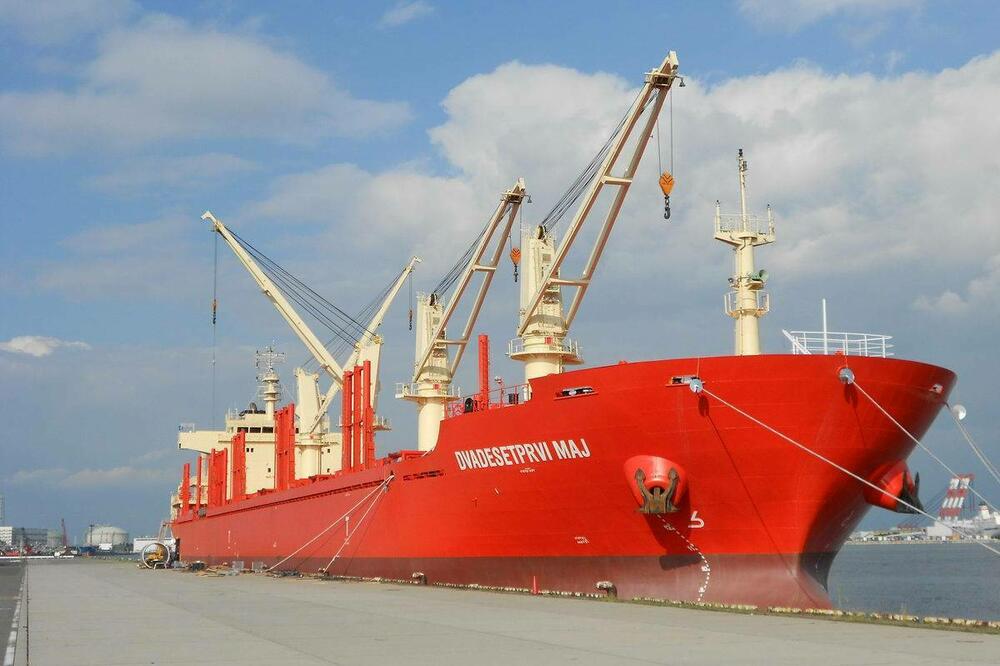
In September 2025, Crnogorska Plovidba JSC (CP) sold its two cargo ships Kotor and 21. maj to the Danish company K/S Navision Group for USD 13.2 million (USD 5.75 million for Kotor and USD 7.5 million for 21. maj). Critics of the sale– which was approved by the Ministry of Maritime Affairs– claim this price was at least one-third below the market value for the two ships, for which the government paid USD 55 million in 2012.
The sale prompted an immediate and forceful backlash from industry experts, politicians, and activists, who called the deal “corrupt” and pilloried officials for ignoring competent advice. In October 2025, Montenegro’s Special State Prosecutor announced an investigation into the actions of company representatives and Ministry officials for potential violations of national law.
Meanwhile, a review of international best practices shows that such transactions look significantly different in countries with strong regulatory frameworks. In these jurisdictions, state-owned companies must go through a public process to sell multimillion dollar vessels, involving experts and shipbrokers who have proven experience in maritime law and ship transactions.
Instead, Crnogorka Plovidba hired an unknown law firm behind closed doors, and then liquidated state assets for a price that did not even cover the company’s EUR 25 million debt to the state.
Ministry officials and company representatives defended the hasty sale, arguing they were backed into a corner due to the Commercial Court’s limited holiday hours. In a claim later rejected by the same court, they said it was “impossible” to apply for another mortgage in August.
Captain Janko Milutin, president of the Association of Maritime Captains, criticized the Ministry of Maritime Affairs for publicly undermining Crnogorska Plovidba and its assets– even publishing unfavorable photographs of the two vessels ahead of the sale.
“Unfortunately, they wanted — and succeeded — in ensuring that the ships were sold as quickly as possible and below market value. Such conduct by responsible parties, as far as we know, has not been recorded in the maritime business world,” Milutin told the Center for Investigative Journalism of Montenegro (CIN-CG).
UNVETTED COUNSEL, SIDELINED EXPERTS
CIN-CG spoke to attorney Vera Vučelić-Radunović of VRD Legal, who was paid EUR 135,000 to represent Crnogorska Plovidba in the sale. According to Vučelić-Radunović, the transaction did not fall under laws governing public procurement or state property, and so the company was not obliged to put out an open call for proposals or conduct a bidding process.
“Nothing was being procured — the assets were being sold,” she told CIN-CG. “The State Property Law also does not apply in this case because, although the state is the sole owner of Crnogorska Plovidba, the vessels Kotor and Twenty-First of May are not state property in the formal sense, but assets of a joint-stock company operating under the rules applicable to business entities,” Vučelić-Radunović said.
Crnogorska Plovidba told CIN-CG that the company urgently retained counsel in July 2025 after its American creditors warned that the Kotor could be detained in U.S. waters due to outstanding debt.
Instead of a public call, tender, or any competitive procedure, Crnogorska Plovidba contacted several lawyers, “all of whom — except attorney Vera Vučelić-Radunović from VRD Legal — refused the job due to annual holidays and short deadlines,” Crnogorska Plovidba’s Executive Director Vladimir Tadić told CIN-CG.
Article 14 of Montenegro’s Public Procurement Law exempts only narrowly defined legal services — representation before courts and arbitration bodies, representation in amicable settlements, legal advice directly related to such representation, notarial services, and legal services in privatization procedures.
National media have previously reported on VRD Legal, noting that the company does not appear in Montenegro’s formal register of law firms. Its prior experience with maritime law cannot be verified through publicly available references.
According to Vera Vučelić-Radunović, the firm is not legally required to disclose its expertise– “nor are we obliged to publish a list of all clients we have represented,” she told CIN-CG.
Meanwhile, the Association of Maritime Captains felt it had been conspicuously excluded from the liquidation process after repeatedly advocating for a concrete solution to save the company, akin to the restructuring of Barska Plovidba in 2015. The Association, which represents experienced maritime professionals who have long monitored the situation in Montenegro’s shipping sector, is well positioned to offer technical, industry-based expertise on market cycles and vessel valuation– as well as alternatives to liquidation.
“No one from the ministry or other institutions contacted us or sought expert assistance regarding Crnogorska Plovidba’s problems,” Captain Milutin told CIN-CG. “As a professional association, on two occasions during meetings with the minister, we proposed — among other things — that the ministry engage a professional and reputable firm to prepare an analysis of the business operations of Crnogorska Plovidba and Barska Plovidba,” Milutin said.
Instead, the ministry had proceeded with the sale without formally engaging with the Association’s strategy to avoid liquidation.
Milutin also explained that there is a “right” way to sell publicly owned vessels.
“Standard practice in the purchase and sale of ships, due to the high value and complexity of domestic and international maritime regulations, is to engage a law firm with experience and references in maritime law to represent clients in second-hand vessel transactions,” Captain Janko Milutin told CIN-CG. .
“However, the Ministry of Maritime Affairs engaged a domestic law firm with no experience or references in this field, which issued a pro forma invoice for its services…in the amount of EUR 135,000 - an exceptionally high fee for this type of work. This raises questions about how the amount was determined, whether it reflects the actual scope and complexity of the services provided, and whether public funds were used appropriately.”
In an open letter, the Maritime Captains also suggested the sale may have violated the Companies Act, which holds that the liquidation of high value assets falls exclusively within the authority of the Shareholders’ Assembly. The shareholders' Assembly did approve the sale of both vessels in July, but it was the Montenegrin government that ultimately decided on the price and conditions– constituting a “possible overstepping of authority by the government,” the letter stated.
As the company spiraled toward bankruptcy, Crnogorska Plovidba and Ministry officials also overlooked the Montenegrin Association for Maritime Law, up to and including the asset liquidation. As the main professional body representing Montenegrin seafarers and maritime experts, the Association was intimately aware of the industry’s operational realities and had previously taken part in discussions on sector reforms. The group reasonably expected to be consulted on decisions affecting the future of a state-owned shipping company.
“Neither the Montenegrin Association for Maritime Law, nor myself as its legal representative, nor any other bodies of the Association, received any official request, invitation for cooperation, or any initiative whatsoever from the competent authorities regarding the sale of the vessels,” Maja Radunović-Ćulafić, President of the Association, told the Center for Investigative Journalism of Montenegro (CIN-CG). She emphasized that the Association was not involved in the sales process, nor did it receive any inquiry that would have enabled it to form an expert opinion on the specific circumstances of the transaction.
“As a professional association dealing with maritime law, we stress that the sale of vessels is a legally and technically complex process, requiring knowledge and experience in the application of specific maritime law institutes, as well as an understanding of market mechanisms in the maritime industry. Thorough preparation and legal precision in such procedures are essential for safeguarding the interests of all parties involved,” Radunović-Ćulafić said.
The sale also drew harsh public criticism from financial analyst Miloš Vuković, CEO of Fidelity Consulting, who voiced his opinion at a parliamentary hearing on the matter in mid-November 2025. Vuković said the transaction displayed “a disastrous combination of systemic ignorance of the subject matter by individuals holding high state offices, an incompetent law firm that appears to have been selected in advance, and possible corrupt actions by all or some of the actors involved — for which there are grounds to suspect that the state of Montenegro was damaged by several million euros.”
Vuković concluded that “state assets with a book value exceeding EUR 30 million were sold below [market] price, while at the same time enormous sums were paid to a law firm with no experience in complex maritime law procedures, which may have led to an unfavorable and costly complication of the situation for Crnogorska Plovidba, while the public was — consciously or unconsciously — misled.”
This figure corresponds to the value recorded in the company’s 2024 audit report, which estimated that the two vessels, Kotor and 21. maj, were worth EUR 30.4 million as of 31 December 2024 after depreciation. Despite that valuation, the Government later approved their sale for about EUR 11.2 million, roughly 37 percent of their accounting value, according to reporting by Vijesti.
VRD LEGAL’S EXPANDING ROLE
Crnogorska Plovidba’s Executive Director told CIN-CG that the company initially hired VRD Legal in 2025 to help prepare documents pertaining to a mortgage, at an hourly rate. But as the company’s legal and financial troubles escalated– problems that had already become public– management kept turning back to the same attorneys for help.
There was a second mortgage; a dispute with a chartererleading to the Kotor’s seizure in UK waters; and then Prva Banka dropped the company’s credit line. Crnogorska Plovidba also ran afoul of the International Transport Forum when crewmembers filed complaints over nonpayment.
“After that, the company required broader expert support in corporate, organizational, and governance matters within the competence of management and the Board of Directors,” Tadić told CIN-CG. “For reasons of continuity, familiarity with the case, and satisfaction with the cooperation to date, Crnogorska Plovidba decided to continue its engagement with VRD Legal in this area as well.”
The company continued to pay VRD Legal an hourly fee, according to Tadić. When asked to oversee the sale of the vessels, the firm again requested the same fee structure due to the scope and nature of the work. Given the company’s dire financial situation, Tadić said, management had negotiated the firm’s proposed fee down from EUR 200 to EUR 150 an hour. When it came to liquidation, the lawyers agreed to receive payment only after the sale was concluded.
In reference to the vessel sale, Tadić noted that company management had conducted due diligence on the going rates for similar legal work, and that the minimum hourly fee put forth by Montenegro’s Bar Association is EUR 125. They “concluded that the proposed price was fair, especially given the complexity of the case, the expertise involved, and the attorneys’ willingness to work continuously throughout the summer months,” Tadić told CIN-CG.
Based on the above and the need for urgent, continuous, and reliable expert engagement, Crnogorska Plovidba continued to engage the VRD Legal team.
The question remains whether it was bad legal advice, slow reactions, or insufficient experience which led the first buyer– and higher bidder– to withdraw from the sale. In September, the Turkish EOS Group was ready to purchase the vessels for USD 16 million. However, the deal failed, while each side publicly blamed the other.
Both Crnogorska Plovidba and Vučelić-Radunović reject claims that Montenegro suffered multimillion-euro damage.
Vučelić-Radunović emphasized that lawyers are not responsible for the price of vessels because “a lawyer does not make commercial decisions for the client,” and refused to comment on potential “lost revenue” because the transaction was still technically incomplete– one sales contract was still unsigned, and the vessels had not been delivered yet.
As for the necessity of the sale, she continued, the firm never advised its client that it was impossible to take out another mortgage in August.
VRD Legal attorneys also deny responsibility for the fact that Prva Banka blocked Crnogorska Plovidba’s account, worth EUR 300,000. They state that they were engaged only after the bank had already activated contract termination and threatened enforcement, and that the company “simply did not have the funds” to prevent the account freeze.
While VRD Legal claims that it protected the client’s interests, it is unclear why Crnogorska Plovidba did not engage in a minimally transparent procedure for such a high-value transaction.
It is also uncertain whether “urgency” was a valid reason for Crnogorska Plovidba to engage a small firm with no verifiable experience in maritime law, when the company’s legal and financial pressures did not arise overnight. Crnogorska Plovidba had been struggling for years with mounting debt, liquidity problems, prior mortgage arrangements over its vessels, disputes with charterers, and repeated warnings about potential asset seizures.
THE EUROPEAN UNION AND BEYOND
The sale of high-value public assets “is fundamentally different in Japan and in international practice,” Časlav Pejović, an expert in international law with a particular focus on maritime law, told CIN-CG. In those jurisdictions, “it is customary for the decision to be made by the board of directors, after which company management engages a specialized broker for the sale of second-hand vessels, who then seeks potential buyers.”
Pejović explained that brokers provide indicative vessel valuations based on factors such as year of build, class, vessel type, market conditions, and operational status, while the final price is negotiated by the parties.
“The broker usually prepares a form of preliminary agreement. After that, the parties negotiate the final terms and price. These contracts are usually concluded in the form of a Memorandum of Agreement, as the decision to buy or sell is typically made after a vessel inspection,” Pejović said.
According to the OECD Guidelines on Corporate Governance of State-Owned Enterprises, vessel sales should be conducted through public calls, open tenders, or qualification procedures, with mandatory engagement of external legal and financial advisors who have proven experience in maritime law and ship transactions.
EU directives on public procurement and state asset management provide similar rules: even when it is not a ‘procurement’ but a sale of state assets, the state must ensure competition, public transparency, and verifiable references of engaged advisors.
In practice, this can be seen in countries such as Croatia, Slovenia, Cyprus, and Greece, where vessel sales are published on public platforms and the selection of law firms is conducted through formal calls or tenders with at least several competing offers. Legal advisors in such processes do not work exclusively on hourly rates, but under predefined models — fixed fees, capped amounts, or partial payment through success fees — allowing for greater financial predictability and control.
In many European countries, the state-owned company would be legally obliged to publish vessel valuations, conduct independent due diligence of their technical and legal condition, and prepare risk assessments and negotiation records. The sale of vessels owned by state-owned companies almost never depends on ad hoc legal interpretations or the “urgency of the moment,” but on institutional mechanisms.
Greece, a global maritime hub, places the sale of vessels owned by state-owned companies under the supervision of the Hellenic Asset Development Fund, which publicly publishes tender documentation, including technical inspection reports, risk analyses, and financial evaluations.
In Cyprus, every high-value transaction is accompanied by independent due diligence and a best-value assessment to determine whether withdrawal of the first bidder or a price reduction constitutes a management failure.
There are also good examples within the former Yugoslavian region. Croatia conducts sales of vessels belonging to Jadrolinija and other state-owned companies through public calls published in official gazettes and international shipping platforms. Slovenia applies a “multi-layer approval” system: the Slovenian Companies Act (ZGD-1) requires that all significant decisions exceeding ordinary business operations be approved by the supervisory board or shareholders’ assembly, which in state-owned and majority state-owned enterprises must approve all “high-value transactions,” including the engagement of external advisors. Slovenia also has a Corporate Governance Code for public enterprises and listed companies, which serves as a standard of good practice and obliges such companies to publish advisor selection policies and engagement criteria.
SHIPS GONE, LIABILITIES REMAIN
The vessels Kotor and 21. maj were purchased in 2012 through a loan from China’s Exim Bank. They cost USD 55 million, with interest of USD 12 million, bringing the total to USD 67 million. The loan repayment period was 15 years, with a five-year grace period starting from the time of construction. The government issued guarantees for this purchase.
“The loan taken from Exim Bank for the purchase of the first two vessels was not repaid by Crnogorska Plovidba, but largely by the state as guarantor, on the basis of which Crnogorska Plovidba owes approximately EUR 37 million to the state of Montenegro,” the Ministry of Maritime Affairs announced this week.
Crnogorska Plovidba is now on the brink of closure, while the state is left with enormous liabilities. The question remains why Crnogorska Plovidba was allowed to fail in such a way- without input from stakeholders, and before repaying the debt that ultimately fell on the shoulders of citizens.

ASSOCIATION OF MARITIME CAPTAINS
Chronology of Wrong Decisions
Full statement of the Association of Maritime Captains.
“The decision to sell the vessels of Crnogorska Plovidba (CP) was, in our opinion, wrong, while the manner in which the sale was conducted is suspicious and potentially unlawful,” representatives of the Association of Maritime Captains told the Center for Investigative Journalism of Montenegro (CIN-CG).
“In the second half of last year, the Minister of Maritime Affairs, Filip Radulović, announced the sale of the vessels of ‘Crnogorska Plovidba,’ effectively signaling the shutdown of the company, which had a negative impact on both [the shipmanagement and employed seafarers. It appears to us that an unofficial decision to shut down ‘Crnogorska Plovidba’ had already been made at that time, instead of determining a realistic survival plan for the company after repayment of the final installment of the Chinese loan in January of this year.
After the repayment of the final installment of the Chinese loan, the debt of ‘Crnogorska Plovidba’ to the budget of Montenegro amounted to approximately EUR 36 million. The Association proposed that, given the importance of preserving maritime shipping in the Bay of Kotor and Montenegro as a whole, this debt be converted into equity, followed by a change in ownership structure (public–private partnership) and the engagement of a professional and proven management team. The Ministry responded that this would be considered state aid and would not be permitted by the Agency for the Protection of Competition.
If that is the case, we ask why the Government, in September of last year, at the proposal of the Minister of Maritime Affairs, adopted a decision granting state aid in the amount of EUR 5,250,000 to support the organization of the ‘Ocean Race’ regatta.
Regarding the remaining debt to the state budget in the amount of approximately EUR 25 million, we ask the Minister of Maritime Affairs who will now repay it, given that the vessels have been sold. Why was it not made possible for ‘Crnogorska Plovidba’ to survive and continue repaying its debt at a time when the maritime market is recovering and when profit could realistically have been achieved? A good example is ‘Barska Plovidba,’ which has been generating profits for some time now.”
The Association of Maritime Captains further states that, according to available data from the Information prepared by the Ministry for the Government session held on 10 July 2025, both vessels were sold for USD 13,250,000, despite their market value, according to reports by reputable brokerage houses, being approximately USD 20,000,000. The same Information confirms that the vessels are worth at least USD 19,000,000.
“The sale of the vessels was not conducted through recognized shipbrokers, which is the standard and transparent procedure, but rather through a direct sale based on negotiations with interested buyers. The chosen method of sale raises suspicion of possible malpractice. Finally, there is an indication of a possible overstepping of authority by the government.
Pursuant to Article 133 of the Companies Act, the decision on the disposal of assets of great value may be adopted exclusively by the Shareholders’Assembly. In this case, however, that decision was reportedly made by the Government of Montenegro. It is important to note that the Shareholders’ Assembly, at its extraordinary session held on 16 July 2025, adopted a decision on the sale of the vessels Kotor and 21. maj, but that decision does not contain the conditions of sale nor the purchase price — the most essential element of a sale agreement — nor does it specify the sale contract on the basis of which the high-value assets are being disposed of.
Therefore, the Shareholders’ Assembly adopted a merely declaratory decision, which has no legal value in terms of the application of the Companies Act, nor in terms of the seller’s obligations arising from the relevant Sale and Purchase Agreement, i.e., the Memorandum of Understanding dated 15 September 2025.
All of the above indicates serious doubts regarding the legality of the vessel sale agreements and requires the involvement of all competent authorities to determine responsibility, possible abuse or overstepping of authority, and the lawfulness of the decisions reportedly adopted by the Government of Montenegro.
We demand that all circumstances that led to the sale of the vessels below market value — including the elimination of a competing offer from Turkey — be examined by the competent authorities. In this regard, we welcome the latest decision of the Special State Prosecutor’s Office (SDT) to investigate the actions of the Ministry and the Board of Directors of ‘Crnogorska Plovidba’ in connection with the sale of the vessels,” the Association of Maritime Captains concluded.

Leave a Reply

 English
 Facebook
 Youtube
 X (Twitter)
 Instagram
2023, Centar za istraživačko novinarstvo CG - Sva prava zadržana