
The World Health Organisation data show that 6 % of deaths in Podgorica, 12 % in Niksic and 22 % in Pljevlja are caused by air pollution. The authorities and polluters keep delaying actions which would help reverse the situation
At the end of January the alarm bells rang in Skopje due to dramatic air pollution which was 10 times more that allowed. The government prolonged school break, introduced free public transport and doubled parking fees so to discourage the use of vehicles. Furthermore the government recommended older people as well as those with chronic diseases not to go to work for a while.
However, the Montenegrin government did not bother itself with similar measures even though the air pollution in Podgorica was 18 days above the red line in the end of December. The alert in Pljevlja lasted 29 days in the same month. Furthermore, the Centre for Eco-Toxicological Research recorded in the end of November the greatest ever pollution in Plevlja- 23 times more than it is allowed.
The Government and the biggest polluters keep tossing responsibility to each other and always come up with new bureaucratic and other excuses so to evade strategic projects which would cut the air pollution. On the other hand the population’s health keeps deteriorating. Pljevlja is a city notorious for population exodus. CIN-CG & Monitor investigation points out to Podgorica and Niksic as seriously affected by air pollution.
The World Health Organization (WHO ) reports that 6 % of all deaths in Podgorica, 12 % in Niksic and 22 % in Pljevlja can be attributed to air pollution. The studies on these three towns point out to more than 250 premature deaths, 140 hospital admissions per year and a number of other health related issues due to exposure to particles which exceeds the WHO prescribed values- it is reported by the Institute of Public Health of Montenegro.
This institution states that the annual rate of premature mortality associated with exposure to particular pollutants in Montenegro is up to 60 times higher than the fatal road accidents.
In response to questions submitted by CIN-CG & Monitor, the Institute, cited details from The impact of air pollution on health in Montenegro, which was published in 2016 and compiled by WHO expert Dr. Michal Krzyzanowski, a visiting professor at Kings College in London.
High values of carcinogens benzo (a) pyrene in the PM 10 particles (diameter of less than 10 micrometers) exceed the boundaries of up to 15 times. This polycyclic aromatic hydrocarbon contained in coal tar is listed in the first group of carcinogens by the International Agency for Research on Cancer. It causes tumour of the ovary, lymph nodes, breasts, liver, digestive tract, lung, and leukemia.
Outdoors activities at your own risk
Record air pollution for years has ranked Pljevlja among the ten most polluted cities in Europe – according to WHO. The Institute of Public Health does not recommend outdoors activities there, especially when it comes to children and youth.
The Environmental Protection Agency in its response to CIN- CG & Monitor says that the air in Montenegro is primarily affected by solid fuels used for heating and nearly 200,000 registered motor vehicles with an average age of over 14 years. When it comes to heavy industry the main polluters are Plevlja Thermoelectric Plant, Pljevlja Coal Mine and Niksic Steel Plant (Toscelik).
"The air pollution problem exists in Tetovo, Prilep, Skopje, Zenica, Tuzla, Sarajevo, Uzice ...Thus when it comes to PM 10 and PM 2.5 particles Pljevlja have the same level as those cities. But, if we talk about heavy presence of other chemical elements - nitrogen, sulfur dioxide, thorium, uranium, and others then Pljevlja has outpaced all other cities by far" said Milorad Mitrovic, the executive of Breznica NGO.
He pointed out to the local health centre data released at the end of April last year. In just four months 35 women in Plevlja, aged between 35 and 50, were treated for breast cancer.
A few years ago the media published a sad story about 11 people in Pljevlja who were all family related. They all died of lungs cancer within a year. Dr Vesa Jecmenica (died in 2015) claimed in 2012 that a genetic mutation was in full swing in Pljevlja. Thus in addition to malignant diseases growth there was also a growth of congenital anomalies.
The Pljevlja Epidemiological Office reported 395 visits due to malignancy issues in 2017. The National Register of Malignant Neoplasms reported 175 newly registered cases of cancer in Pljevlja in 2013. There’s still no data for 2014.
Heating Plant, finally?
The latest government report boasts that “the government and its institutions are striving to improve the air quality in Montenegro, with special emphasis on Pljevlja“. The Environmental Protection Agency further elaborates the government efforts saying that they refer to construction of small power plants and heating system in Pljevlja. The authorities will also work to improve the air quality monitoring on the national level ...
The national power company (EPCG) announced the investment of €60 million in environmental protection, while the Pljevlja Coal Mine claims that it spends more than €10 million annually. The Agency states that a heating plant in Pljevlja would permanently solve the problems in the town center, provided that most homes are integrated in the heating network. This project would cost at least €20 million and has been talked about for years.

The mayor of Pljevlja, Mirko Djacic halted the heating plant tender in February last year, because the bids were declared invalid. Prior to the local elections in the spring of 2018, the municipal leaders and government officials were promising that pollution reduction would become tangible in the very same year. After they won the elections, the construction of the heating plant did not even begin. The contractor, Tim Company in Pljevlja, has not yet received the construction permit from the Ministry of Sustainable Development and Tourism (MORT).
“We expect MORT to issue the permit this week “ said Mervan Avdovic, the vice-chairman of Pljevlja’s City Council . He would not talk about deadlines for the project completion but he said that the construction would be swift.
Vaso Knezevic, a landscape architecture engineer and environmental activist in Pljevlja, explains that each polluter should be ordered certain things in order to help the environment. "The coal mine should reclaim the Jagnjilo Pit so to reduce the negative effects of the mining machinery. The dust from the open pit lands on the whole area... Then the thermoelectric power plant should install desulphurisation and slag removal filters…. The heating plant is perceived as the best solution and is spoken about for some 30 years, but we haven’t come to that in real terms yet" said Knezevic.
Mitrovic reminds that the authorities often stress the unfavorable climate and geographical position, because the town is surrounded by hills thus being deprived of air circulation.
“That is true, but the town is built in depression. Furthermore, over 120 million tonnes of material from the mine have been piled up on the hill. That disrupted the wind rose. There is no more north wind that used to clean the town’s air. The landfill of Culina Guka on the edge of the town prevents the air flow, while Velika Plijes and Mala Plijes landfills close the air flow on the town’s south. The coal mine changes the landscape and our living conditions. The abandoned open pit mines in Sumana and Borovici are filled with water and the surrounding landscape looks like Mars” says Mitrovic.
Running away as far as possible
The Coalition 27, which brings together the most important NGOs dealing with ecology, states that there are no strategies for air quality improvement in four municipalities, although the air pollution is on the rise. Implementation of the Pljevlja Strategy is still not satisfactory. There are no visible results yet and the level of pollution has remained the same as in the previous years.
Monstat- Statistical Office of Montenegro, records a negative migration balance for Pljevlja in the last decade. Pljevlja is number one in Montenegro when it comes to population exodus - the number of deaths exceeds the number of births by 144.
In the first week of February the Pljevlja City Council’s ruling majority rejected the proposal of the entire opposition to endorse emergency measures against pollution. The opposition asked the Council to press charges in court against the government for its deliberate obstruction of environmental protection plans. The opposition also wanted the EPCG power company and the Pljevlja Coal Mines to define the measures whereby they will tackle the overall pollution in accordance with the EU standards and recommendations.
Nonetheless the majority supported the “ongoing government efforts”.
Pollution and harmful effects

According to the Institute of Public Health, the so called rough PM10 particles increase the respiratory illnesses and mortality rates. They aggravate asthma, bronchitis and other similar diseases.
The EU regulations as well as Montenegrin tolerate an average PM10 daily value of 50 micrograms per cubic meter (μg/m3) which must not be exceeded more than 35 days a year. Official statistics show that from 2011 to 2018 the excessive presence of those particles in Podgorica lasted from 64 to 89 days a year, in Niksic from 104 to 147, and in Pljevlja from 144 to 217 days.
The average annual concentration of PM 10 particles should not exceed the ceiling of 40 μg/ m3. However Podgorica is near the line each year at 37.38, and in 2015 it was 41.91 μg/m3.
The data for Niksic show 43 to 62, while in Pljevlja those values go up to a staggering 99.81 μg/m3 recorded in 2015.
An increase in the average annual value of the "fine" PM 2.5 particles (diameter less than 2.5 micrometres) was recorded in Niksic and Pljevlja. The red line value is 25 μg/m3. In Niksic it is often at the border value, while in Pljevlja the recording exceeds 40 micrograms every year which qualifies the city among the most polluted in Europe.
EPCG: Plans and predictions and more lip service
The Montenegrin Electricity Utility (EPCG) replied to CIN CG & Monitor that the company was doing its best. They state that in 2013/14., they implemented a project that stabilized the Maljevac Landfill boundary wall. Moreover the expropriation of the nearby land is in progress so to afford a buffer zone. The Maljevac reclaim project is worth €20 million and another €40 million have been assigned for fixing Block 1 of the Pljevlja Thermoelectric Plant.
The EPCG says it’s is keen to reduce the content of oxides, sulfur and nitrogen in flue gases, then to construct a wastewater treatment plant, a new system of dry transport of ash, slag and chemical gypsum, as well as to remove asbestos from the cooling tower.
The Coal Mine AD Pljevlja told CIN CG & Monitor that it regularly conducts controls of waste oils and lubricants. Moreover they spend €150,000 each summer for sprinkling dirt roads to keep the dust down.
In early 2018 the sewage sludge purifier was put in action for the Cehotina River water treatment near the open pit mine there. The investment amounted to €280,000.
“We regularly conduct checks. The total cost of testing the air and water in the last five years reached €104,000 “said the Coal Mine press service.
Predrag NIKOLIĆ

BANNED IN MONTENEGRO BUT BELOVED IN ALBANIA, TRADITIONAL "DALJANI”, OR FISH WEIRS, ARE BEING BLAMED FOR A DRAMATIC FALL IN FISH STOCKS IN LAKE SKADAR.
Dzelal Hodzic fondly remembers the biggest catch of his life.
“You could feel it by the noise,” said the veteran Montenegrin fisherman. “It was night, and they just said ‘lift!’ It took us from morning until the following night to get it out. We didn’t know what to do with that much fish.”
It was October 1971, and Hodzic – now head of the environmental group Green Step – and his colleagues had just landed 23 tonnes of fish in a single net, trapping them with a weir as the fish headed back to the Adriatic Sea from spawning in the fresh waters of river Bojana. They sent the catch north to be sold in Croatia’s medieval town of Dubrovnik, when Croatia and Montenegro were both part of socialist Yugoslavia.
Such stories have long since become legend in the communities that live off this lake, which straddles the border of Montenegro and Albania.
Dams, construction, pollution and over-fishing have cut the lake’s fish populations dramatically.
The sturgeon has been gone for decades, while the endangered European eel, the leaping mullet, thinlip mullet and twait shad are all at risk.
The use of fish weirs is banned in Montenegro, but the traps are permitted by Albania, where they are known as ‘daljani’ and have a history stretching back for centuries.
But while authorities in Albania say the daljani are used in line with the law and cannot be blamed for falling stocks, fishermen in Montenegro say they are devastating the lake.
“The Albanians have cut off the lake; a fly can’t get past,” said Marko Masanovic, a member of the Professional Fishermen’s Association of Ulcinj, a coastal town in southern Montenegro near the Albanian border.
“We have nothing this year: prawns, leerfish… nothing,” he told the Centre for Investigative Reporting of Montenegro and Balkan Investigative Reporting Network, CIN-CG/BIRN.
“Before, you could fish with rods. Now, even a net doesn’t help.”
Centuries of tradition
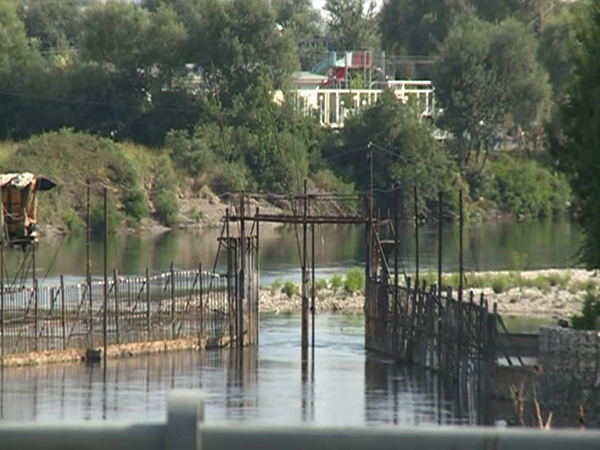
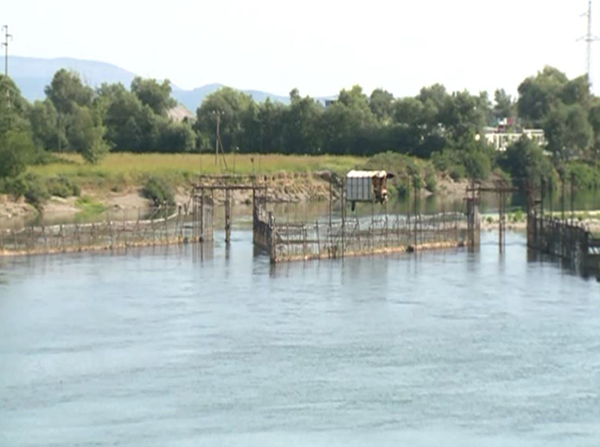
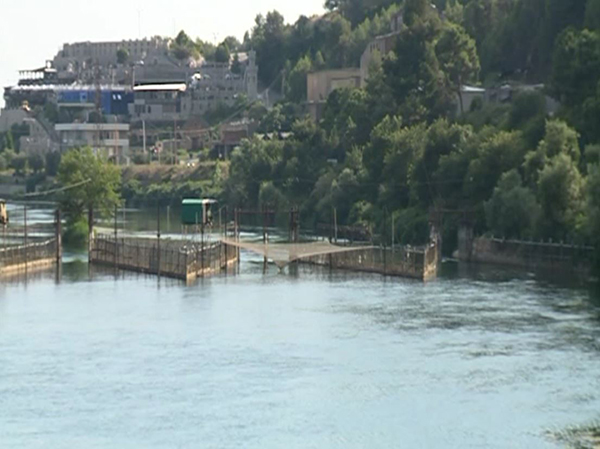
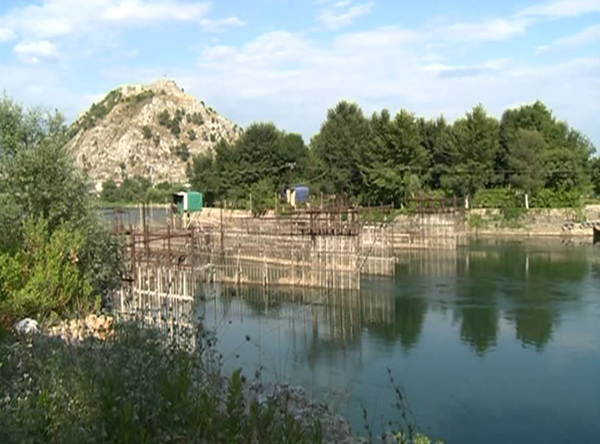
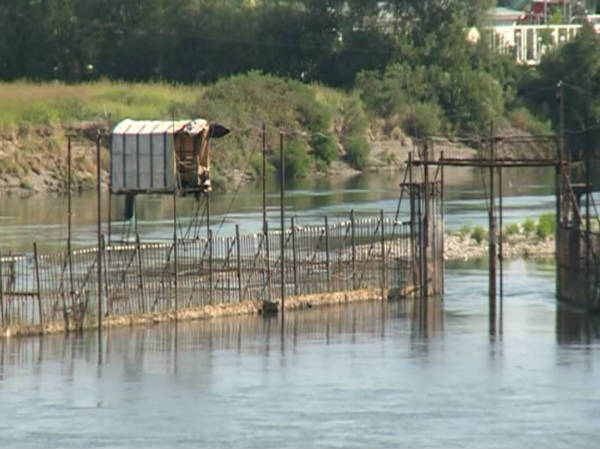
Daljani are barricades made of metal or wooden canes placed at the mouth of a channel between a lake and the sea, channeling the fish as they try to return to the sea from the lake into a trap, from where they are lifted out in a net known in Albanian as a ‘kalimera’.
The traps have been used for centuries in Albania, their V-shaped nets catching whole shoals of migrating fish.
In the late eighties and early nineties, they were run by the state, but fell increasingly under the control of local Albanian families during a period of intense turmoil in the country towards the close of the 20th century.
They are now in the hands of concessionaires, who operate the weirs under state supervision.
Albanian authorities insist there are strict rules on when and how much the daljani can be used. But a number of industry insiders told BIRN there was considerable room for abuse.
In August 2018, when under the law passage through the channel must be free, CIN-CG/BIRN reporters observed a daljani with its net hoisted above the water, as would be expected during the fishing ban season. But a few days later, CIN-CG/BIRN reporters observed that the net was below water, suggesting it was in use.
Two unidentified men on a boat threatened CIN-CG/BIRN reporters trying to shoot pictures, saying the site was private property and filming was not allowed.
Albania’s Deputy Minister of Agriculture, Roland Kristo, said the daljani were used in line with the law. “And the law is very clear,” he told CIN-CG/BIRN.
Under the law, the daljani on the River Bojana, which flows from Lake Skadar to the Adriatic Sea, are open between March 15 and August 31, and closed for the rest of the year.
The concession is granted for a period of two years and is monitored by Albania’s Organisation for Management and Maintenance of Skadar Lake.
“The daljana are not a novelty, this is a tradition,” said the head of the organisation, Arijan Cinari.
“They are open for half a year, and then closed. In these six months when they are closed, there are days when they should be open,” he told CIN-CG/BIRN. “We control these days. We do not do it ‘by chance’ or to favour someone. We just want to support the reproduction of fish in Skadar Lake.”
“I don’t think there any such ‘heroes’ who would risk their licence for a day or two, or even a week of poaching.”
Ichthyologist Danilo Mrdak of the University of Montenegro, however, said such rules would do little to help fish stocks. The daljani are designed to catch the fish precisely when it is trying to migrate, he said.
“There is no other reason why thinlip mullet, or the leaping mullet, is not entering and is not present in the amounts the fishermen are used to in Lake Skadar,” he said.
“There is no other reason for the lack of twait shad. Since democracy arrived in Albania, our fishermen have been having constant problems, because we have a constant decline in catches,” Mrdak told CIN-CG/BIRN.
“Only in those years when the water level went above the grids did something manage to get through…. But we are at God’s mercy.
No precise data on decline
Precise catch statistics over the past 40 years are not available.
With the demise of the socially-owned company Industriaimport, which managed fishing on the lake, and the closure of the ‘Ribarstvo’ factory in Rijeka Crnojevica, the only reliable register of fish catches from Lake Skadar were lost.
Records from 1947 to 1976, considered relatively reliable, show a considerable decline every year.
According to one report, if mullet was caught at a rate of 250 tonnes 30 years ago, today the yearly catch is roughly 5-6 tonnes, with the decline attributed to a range of factors.
“I remember when I started out, I caught ten times more than I catch now,” said Nikola Vujanovic, a fisherman from Rijeka Crnojevica, a village on the shores of Lake Skadar.
The daljani “stop everything that moves from either side of the river,” he said.
Only the joint efforts of the Montenegrin and Albanian governments can address the issue.
“It is true that this problem has been around for a long time and that we are trying to solve it,” said Slavica Pavlovic, head of the Fishing Directorate at the Montenegrin Ministry of Agriculture.
In July 2018, the two countries agreed to enhance the work of a joint Water Management Commission on Lake Skadar and the Bojana, the Drim and the Moraca rivers.
Podgorica also plans to commission a study of the effects of the dams on the River Bojana on fish populations as part of a conservation project being implemented by the German development agency GIZ.
“It is evident that there is a decline in the leaping mullet and twait shad populations,” Pavlovic told CIN-CG/BIRN. “We need to obtain precise data in order to prepare a plan of lake management.”
“Though freshwater fishing remains a national level issue, if the issue is a cross-border one, it still has to be regulated by certain agreements and clear rules so that no country suffers due to the negative decisions of the other.”
‘We do not allow it to migrate and leave’
Included in 2010 on a ‘red list’ of threatened species compiled by the International Union for Conservation of Nature, the eel is of particular concern. Fishing data show it is at a historic low and the European Union has recommended constant monitoring.
Mrdak, the Montenegrin ichthyologist, said it was vital to have a joint effort to protect the eel.
“When it comes in February, March and April as spawn, it can enter Bojana and our system is filled, but the problem is that the ell is not allowed to go back to the sea” he said. “We prevent 40 percent of ells to return and spawn.”
“There is more of ell along Europe’s coastline while the Atlantic coast abounds with it. This little bit that we are preventing is just a ‘drop in the ocean’,” Mrdak told CIN-CG/BIRN. “But it is not right to reap the benefits of the good conduct on the Atlantic coast, and for us not to bother.”
But in Albania, Kristo, the deputy agriculture minister, said falling eel populations was hardly unique to Lake Skadar.
“The eel is endangered worldwide; the reason is hard to find,” he said.
Kristo argued that it was in no one’s interest to illegally catch eels given that the Montenegrin and Albanian markets are small and the catch cannot be exported to the EU since the bloc bans the purchase of eels outside its borders.
“The fact is that the drop in eel numbers is not only the case here,” he said. Montenegro, on the other hand, allows trawling for eel, which Albania has banned, Kristo added.
Albanian ecologist Dajana Beko said that eels were endangered by pollution, poaching and climate change. Asked about the daljani, she replied:
“Dam management, legal or not, greatly affects the number and type of fish. If it is managed well it affects the fish, if not, it endangers fish and life in Lake Skadar.”
A MONEY-SPINNER FOR CENTURIES
Journalist and publicist Mustafa Canka says the daljani on the River Bojana have long been coveted as a lucrative source of revenue.
“If you are aware that this is an area where you can continuously fish, that there is constant migration of fish, then you know the value of this,” he said.
“You can see in the cadastral register of Skadar dating back to 1416 that there is a record of daljani. The hunting spots are recorded in the cadastral register of Skadar County. It is written in there precisely who this belongs to. You can lease it and there was an annual fee for it, and how much the state earns.”
“There was talk that it was profitable for the Venetians, and when the Ottomans took Skadar, there was talk that they were a source of considerable profit. All this went into the state treasury, under the sultan. The entire area was always interesting and a great resource to exploit”.
Canka said that under the Principality of Montenegro (1852-1910), there was an agreement with Skadar County about lifting the barricades for three days a year, when eel and thinlip mullet were migrating, in order to give Ulcinj’s fishermen a chance for a decent catch.
Irena RASOVIC

Nature’s delicate balance disrupted by development spree, Montenegro risks losing an iconic island of 515 hectares and kilometres of sandy beaches. The shrinking of Ada Bojana threatens its unique ecosystem.
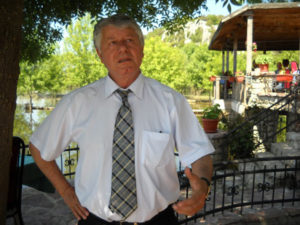
Shyqyri Kahari was once sailing the world for living – until his marriage in 1979 brought him back to his hometown of Ulcinj in Montenegro and a job on a triangular-shaped island called Ada Bojana.
Located at the border between Montenegro and Albania, Ada Bojana is flanked by the two-pronged river Bojana, while the Adriatic seafront side is blessed with a 2.9 km sandy beach. The place is popular with kite surfers, nudists, Belgrade's nouveau riche and a growing number of foreign tourists due to favourable winds and good vibes it radiates. Nonetheless the island is shrinking.
“When I started working, my little house, from which I rented out beach furniture, was 85 metres from the sea,” Kahari, a 76 year old pensioner, recalled. “But today, it’s gone. It would be under water. The beach is 85 metres shorter”. And it’s not only Kahari’s old house.
“The Ada's popular Disko Restaurant used to be about 100 metres away from the sea while today it is literally in the sea,” said veteran tourist guide and Ulcinj publicist Ismet Karamanaga. “We should be alarmed by all of this” he said. “I don’t know whether future generations will live to see the beach on Ada.”
Satellite data confirmation
Schoolchildren in Montenegro are taught that their country is of 13,812 square km in size, bigger than Lebanon or Cyprus, but slightly smaller than the Bahamas. Nevertheless, this land of soaring mountains, bays and beaches is getting smaller by the day.
Some 200,000 m2 of Montenegro’s beaches have already been lost to coastal erosion. Furthermore, building of river dams and reservoirs in the hinterland and stopping and diverting of fords and rivulets that used to feed the coastline with sand and gravel has made things worse. Commercial developments have taken place of the former marshlands thus depriving the sandy shoreline of its natural buttress.
The Balkan Investigative Reporting Network (BIRN) and the Centre for Investigative Reporting of Montenegro (CIN-CG) find out that the authorities’ efforts to halt the erosion have been sporadic and inadequate by far.
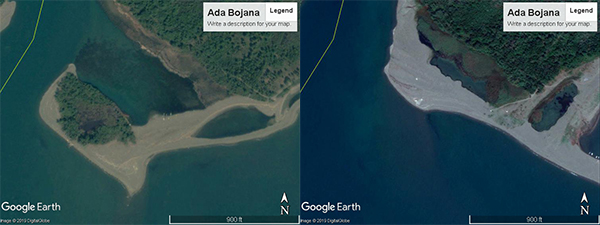
Ada Bojana’s retreat is visible to the naked eye.
“Satellite images confirm that Ada’s beach has significantly lost ground to the sea over the last 30 years. while the beach on the eastern part of the island is virtually gone” said Dzelal Hodzic, the executive of Green Step, an environmentalist NGO.
“The impact of strong southern waves, sea currents, reduced inflow of sediments, sand erosion and callous authorities – all these contribute to ongoing retreat of one of the most beautiful beaches on our coastline,” Hodzic told BIRN/CIN-CG.
Fatmir Gjeka, director of Ulcinj Tourism Office, said: “This should ring alarm bells both in Montenegro and in this city as our greatest resource- the sandy beaches are under imminent threat. We must focus on the causes and fight the erosion”
Unique ecosystem
Besides, a very unique ecosystem of Ada Bojana is also under threat as well as the wider area around the mouth of the Bojana River. The island and the nearby Long Beach (12 km of sandy shoreline) that stretches up to the town of Ulcinj are home to some 500 plant species, of which 23 are protected by law.
Some 250 different bird species are present in the area. Most of them are formally protected and 57 species feature in the European Union’s Birds Directive which defines standards of protection and their habitats in Europe. Over 100 different fish species populate the sea and the delta. It is one of the last Mediterranean places with psammophyte- a vegetation unique to dry, sandy habitats.
The Albanian side of the river is included in the 1971 Ramsar List, an international convention on protection of wetlands. The river itself is the third largest tributary on the European part of the Mediterranean.
The genesis of Ada Bojana goes back to mid 19th century when Merito, a Dalmatian ship under Captain Naporeli, sank between two small islands thereby blocking the river’s free flow into the sea and piling up the sediments and sand carried by the river. Around 1882 the island in progress was already visible.
However, the reversal started by construction of several dams and hydro power plants on the main tributary of the Bojana, the river Drim in Albania during the 1960s, 1970s and the early 2010s. Experts estimate that the outflow of deposits into the sea has decreased by about 30%. Moreover the commercial sand extraction had no limit. The Bojana’s flow is also disrupted by waste dumps on its edges and construction of some 600 holiday homes on the Montenegrin bank of the river.
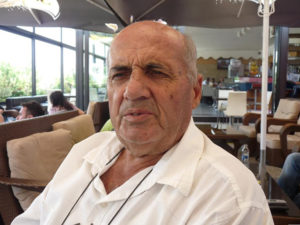
“The dams and reservoirs have altered the Drim river course completely” said Belgrade-based professor Sava Petkovic to daily Vijesti last October. “Thus the depositing of sediments has been disrupted as well”.
Furthermore, back in 2009, the renowned German biologist Martin Schneider-Jacoby (died in 2012) told Vijesti: “It is realistic to expect that Ada will disappear in 50 to 60 years if no action is taken under current circumstances. Optimists say it may happen in 100 years. However, the end is just around the corner”.
Urge for systematic, coordinated response
Nonetheless the authorities have had no response for years except to sit and watch despite the threat to tourism industry which is pivotal to Montenegro’s economy. The government’s Coastal Zone Management Agency of Montenegro warned in July 2018 that the shrinking and vanishing of beaches may have inconceivable consequences for the country’s tourism. However the agency admitted that the efforts against the beach erosion could be labeled as “doing nothing”.
It was stated in National Strategy of Integrated Coastal Zone Management in 2015 that it was impossible to ascertain how quickly the beaches were eroding “due to lack of systematic monitoring”.

Predrag Jelusic, the director of Coastal Zone Management Agency, confirmed that in some parts of Ada Bojana the beach line had receded by 80 metres.“The beach at Ada Bojana is losing ground to the sea at considerable pace” Jelusic told the members of Parliament last December.
Environmentalist groups say that indolence amounts to grave irresponsibility.
Jelena Marojevic, a programme coordinator with Green Home- an environmentalist NGO, said the root of the problem was the water (mis)management in the Drim basin. Civil sectors in both Montenegro and Albania “tried on several occasions to alert the authorities as well as as general public and experts” Marojevic told BIRN/CIN-CG.
Petkovic, in his interview with daily Vijesti, called for a full scale cleaning of the Bojana riverbed “as only that can somewhat halt the beach erosion in Ulcinj”.
Island-turned-peninsula
Decades of neglect came to fruition in August 2017. The Bojana could no longer flow into the sea and the island temporarily became a peninsula. The government finally started dredging the riverbed and freeing the passage to the sea. About 5,000 m3 of deposits extracted from the closed river mouth was used to “nourish beaches” in Ada and the Long Beach.
Milutin Simovic, Montenegro’s Minister of Agriculture and Rural Development, said that both Montenegro and Albania would conduct proper water management and increase flood protection.
Hodzic, an Ulcinj-based environmentalist, says that both countries should strive to coordinate their efforts which are essential for ecosystem’s survival there.
“Spain has succeeded to reclaim its natural beaches in more than 400 locations. Hopefully Montenegro can do the same with the support of the EU.”
Dr Stephan Doempke, a German expert, proposed in 2008 to create a regional park of the River Bojana Delta, “a unique protected region with complex zoning and administration on the local level”. Describing the delta as the most important wetlands in the eastern Mediterranean, Doempke warned that, “if this area is not protected, it will seriously taint Montenegro’s reputation as a tourism-oriented country and ecological state.”
Albania fares no better
One third of Albania’s seacoast of 427 km is threatened by erosion, according to its Ministry of Tourism and Environmental Protection.
The country’s tourism minister Blendi Klosi said last November that the sea was swallowing an average 20 metres of beach every year. However, near the border with Montenegro the sea has washed off some 400 metres of shoreline over last 15 years.
“The sea is chipping off the shore,” Sherif Lushaj, an environmental expert at Tirana’s Polis University, told Albanian Top Channel TV. “This is nature taking revenge against human destruction of nature”.
Klosi said the European Commission, the EU’s executive arm, expected Albania, Montenegro and Croatia to come up with a joint project to protect the coastline.
Fears of flood every year
About 400,000 people live on both sides of the border. The fear of the Bojana spilling over is real. Sometimes the floods occur twice a year, inflicting huge damage to properties and farmlands south of Skadar in northern Albania, and a part of the municipality of Ulcinj in Montenegro.
“Apart from the problem of beach erosion, we saw the clogging of the estuary last year when the Bojana could not flow into the sea. Moreover the frequent floods in the area hint to inadequate response and efforts” said Marojevic. “It seems that the authorities rather focus on how to deal with the consequences then with the causes. Such reasoning and approach will cost us a lot at the end of the day”.
The 2020 Strategic Development Plan of the Ulcinj Municipality envisages regulation of the riverbed and construction of levees to protect from flooding.
Mustafa CANKA
It seems that nothing can deter the government to milk extra millions of Euros out of its tax payers through bloated electricity bills. The proposed small hydro plants are minuscule in tackling the country's current power deficit while looming environmental damage is a way too costly.
The Balkan countries have been known for long time for their breath taking landscapes and pristine lakes, rivers and mountain springs. Nevertheless those sceneries lose ground in many places to dry river beds and extinct animal and plant species. In return, the small hydropower business owners get rich at the expense of nature and law-abiding tax payers. Builders, bankers and governments have visions of some 3,000 small hydro plants dotted from Slovenia down to Albania. If their dreams come true there will be dire consequences for the most valuable Balkan asset- water resources.
Under the pretense of developing renewable energy sources with almost insignificant capacity to meet the country’s needs, the state treasury will award millions through concession deals that will further enrich those around the ruling clique in Montenegro. Some bankers in the Balkans will join hands with the forces that fight the nature. The pattern of behaviour is almost identical in the whole region.
The Balkan River Defence organisation claims that it’s high time to stop the havoc. Its representatives will tour Albania, Macedonia, Montenegro, Bosnia and Herzegovina, Croatia and Slovenia within a month to ring alarm bells. The Balkan free river flows are habitats to 69 animal species that exist nowhere else and some 40% of Europe’s snails and clams inhabit the same rivers.
Slovenian biologist Rok Rozman is the founder of Balkan River Defence. He spoke to the Montenegrin Investigative Reporting Centre (CIN-CG) and the Weekly Monitor. He says that “Three thousand dams (high and small) are to be constructed on the rivers stretching from Slovenia down to Albania. If this happens the local population and Europe will lose the last pristine free flowing rivers. On the other hand, in the northern and western part of Europe more than 3,000 dams will be removed. That speaks for itself“. He says that hydro plants are not considered green and renewable sources of energy anymore as many studies showed their destructive impact on environment, habitats and sustainable life.
“The whole picture is rather clear. The new dams will not help the region generate more electricity or turn it green in terms of renewable energy. This is actually about money laundering and corruption. International funds and big hydro companies are restricted from building in their respective countries hence they come to the Balkans where corruption is widespread and the EU regulations are not enforced. Therefore, we cannot accept to lose the last European oasis of wild life so that just a few can become wealthier than ever”- says Rozman.

International organisations EuroNatur and RiverWatch presented the Financing for Hydropower in Protected Areas of Southeast Europe study in March this year. It was presented together with local Balkan partners and the study has references to 3,000 new dams. It further states that since 2005 the European Bank for Reconstruction and Development (EBRD), the European Investment Bank (EIB) and the World Bank Group have provided loans and guarantees worth 727m € for 82 hydropower plants in the Balkans. That includes 37 projects in protected areas of national parks and Natura 2000 areas. The money provided by commercial banks is what enables controversial projects. It’s hard to keep the track of their financing but the study’s authors came up with 158 cases of which 55 occurred within protected areas. Austrian Erste & Steiermaerkische Bank and Italian Unicredit Group lead the charge in project financing with 28 projects each. In the section related to Montenegro there are references to the First Bank of the ruling Djukanovic family which finances the renewable energy sources there.
According to the Ministry of Economy there are 20 operating small hydropower plants in Montenegro. Five of them are owned by the national power company (EPCG), 2 are joint venture of the EPCG and Norwegian NTE while 13 are operated by private companies. Altogether there will be 53 small hydropower plants as a result of vetted concession deals.
Most of those plants are run by companies closely linked to the ruling clique. The people in Montenegro’s northern communities staged many protests lately amidst growing discontent with small hydropower. They accused the government of stealing the water from them and called for ban on further constructions.
“The whole river is taken away from us. It’s gone into big tubes. Four power plants have been constructed here, all the way from the river’s spring down through our community”- said in the interview for CIN-CG and the Monitor Vesko Davidovic, the community chairman in Sekular, a small place in the north of Montenegro.
It’s pretty much the same in Plav, another northern community, where two small plants were erected on the nearby rivers. The locals moan about the calamity that has descended upon them- dry riverbeds and all fish extinct.
“We foiled the plant construction twice as the environmental study was returned for further elaboration” says Nikola Vemic of the Donja Bukovica Environmentalists. “It was written by someone half illiterate” he said to CIN-CG and the Weekly Monitor. He further explains that his movement organized two protests that were attended by hundreds of people. “We brought experts from Serbia, Croatia and Scotland who refuted the claims of those who denied any adverse effects on the ecology” continues Vemic.
Montenegro’s government refers to 2009 EU Directive to justify the small hydro power businesses. The aforesaid directive instructs the member states to provide at least 20% of power from renewable sources by 2020. The government of Montenegro moved up the notch to 33%.
The hydropower businessmen often refer to Europe as a model stating that 24,000 small plants operate there. Moreover they cite that Norway uses 100% of its hydro potential, France and Italy are at 86% each while Germany and Austria stand at 88%.
“However, we must keep in mind that it’s not the same thing to encourage small hydropower facilities in Western Europe and the Balkans. The West European rivers are not in the free flow anymore while it’s quite the opposite in the Balkans”- explains Vuk Ikovic, a biologist with the Organisation KOD. He adds that “rivers on which hydropower facilities in Montenegro are erected are just rivulets compared to many big European rivers. To capture and redirect a small river into several km of tubes is nothing but a crime against life and nature”.
Milija Cabarkapa of the Green Home NGO says that it’s difficult to define major environmental problems when it comes to small hydropower facilities. “Aquatic animal populations like fish, insects, leech etc. will suffer decline. Many species are forced to migrate and readjust. If they survive, it will take a decade or more to fully repopulate. Some habitats will be lost for good“.
He explains that dams prevent the upstream migration of fish and other creatures. “Tributaries are fish spawning areas and since small hydropower facilities are usually build on the tributaries of big rivers the fish cannot reproduce anymore. The small hydro facilities are proposed on all larger tributaries in Montenegro which will thus ensure the destruction of the fish spawning sites and substantially decrease the fish stocks” says Cabarkapa.
The Coalition 27 which gathers many NGOs from Montenegro and Croatia recently called for moratorium on all further concession deals and review of those already approved. They claim that most permits were approved without the required criteria and in the absence of environmental case studies, strategic guidelines and spatial planning details.
“No one has done a proper evaluation of the ecosystem of the rivers which are planned for hydropower business and that is the worst problem” says in the interview for CIN-CG/Monitor Aleksandar Perovic who heads the Ozone Environmental Movement. He elaborates the importance of rivers for local communities, their way of life, irrigation, fishing and tourism. However everything is irrelevant when selfish interests of a few come to the fore.
“The authorities declare the small hydropower projects a matter of public interest without any serious analysis. That is preposterous indeed. We lose drinking water there which is the most important natural resource by all world standards” points out Perovic.
Biologist Ikovic agrees that Montenegro hasn’t bothered to order a study which should assess the small hydropower impact on the environment and public health and he finds it a big problem. “The small hydro plant projects were done to conform to the interests of just a few privileged while the public interests are completely ignored. The concessionaire is given the whole river basin so that he alone decides where to build while ecological, spatial planning and agricultural standards and criteria must comply to the desires of investors” says Ikovic.
He explains that environmental protection standards are nothing but clichés. “To truly implement those standards is considered an ‘act against the state’ since the small hydropower plants is declared a ‘public interest’. Furthermore, the privileged investors already committed their money hence it ‘makes no sense’ to give up at this stage regardless of bad consequences for the nature and the people. Thereby the authorities prove that they are in bondage to the investors” claims Ikovic.
The Environmental Protection Agency (EPA) states that ecological assessment consists of three phases which include the preliminary review about the need for ecological assessment, the scope and content of the assessment study (optional) and the approval of the same. Asked if anyone was denied construction permit the Agency referred to the case of the Djuricka Hydropower Plant in Plav as the investor (Plava Hidro Power) failed to define the sanitary zone protection thus making the nearby water spring vulnerable.
It is obvious that environmental approval is no obstacle to the investors so far. The assessment summaries contain usual wording that “no adverse effects are expected in regard to the environment and biodiversity”. Environmentalists and local population protest for years as those assessments have proved false.
The Ministry of Economy says that no hydropower permits are planned for this current year “except for reconstruction of the present facilities and irrigation networks. So we are talking only of the facilities that cannot pose a threat to the environment. Furthermore, everything done so far complies with the current regulations and thus there’s no need for extraordinary reviews”. The Ministry reinstates that the moratorium will last throughout 2019.
Besides environmental problems, there are growing concerns about financial feasibility of the small hydropower businesses and whether the state and the ordinary people benefit at all. The legislation has prescribed new renewable energy tax that applies to all electricity bills. The tax was quadrupled in 2017. The renewable energy companies are given incentives and the government guarantees the purchase of all generated electricity in the next 12 years. Furthermore, as of last year there is no more VAT on delivery of products and services related to 10 MW capacity plants for investments exceeding half a million Euros.
“The small hydropower business is among the best examples of the ‘enslaved state institutions’ which must conform to the interests of just a few at the expense of national interests” says Ines Mrdovic of MANS nongovernmental organization in the interview with CIN-CG/Monitor. She points out that common people foot the bills and thus enable profits of the regime’s elite in the country that doesn’t have enough hospitals, kindergartens, schools, community centres…
„Lip service to renewable energy actually serves to disguise the lucrative businesses of those close to the DPS leader Milo Djukanovic and his party clique. The Montenegro Hydro Energy is a striking example that only those favoured by the regime can enter such lucrative deals. The aforesaid company had in store the feasibility study for the hydro plant in Berane the whole year before the tender announcement. No surprise, the company turned up as the best bidder. Later the government extended the concession deal deadlines on several occasions. When the construction was finally over there was nothing there for the local population. Moreover, the locals have even been deprived of the river itself and got nothing in return- points out Mrdovic.
MANS came up with the data that the tax payer money in the form of government subsidies account for more than a half of the revenues of the small hydropower businesses. Now those same companies paid 12 times fewer money in the form of concession fees from 2014 to 2017. The overall revenue of the small hydropower businesses exceeded 9 million Euros of which the subsidies accounted for 4.7 million. The companies paid back to the treasury only 430,000 Euros in concession fees. MANS cited the National Action Plan in regard to renewable energy and came up with a figure of 27 million Euros of tax payers money to be paid by 2020 in the form of electricity subsidies to small hydro businesses.
The Ministry of Economy replied to us that “those so called analysis ignore the value of investments in 13 facilities which amount to 40 million Euros. Moreover the overall revenue is not the profit. The revenue covers for amortization, operational costs and concession fees. Furthermore, those 4.7 million of subsidies over two and a half years reduced the electricity import by 3 million Euros, created 80 jobs, strengthened local economy and provided further infrastructure development over there”.
The Ministry of Economy’s calculation is pretty interesting as Montenegrin households spent 200 million Euros of electricity each year so in two and half years that would be half a billion Euros. Thus the cited 4.7 million accounts for less than 1% of the total bill while the generated electricity in the small hydropower facilities barely exceeds 1% of the total production. The problem is that tax payers finance the subsidies in millions of Euros for the small plants while the share of the small hydropower in the overall electricity production is negligible.
As a consequence the Ministry has recently announced the change of policy. "The government has no plans to provide financial incentives to new investors when it comes to renewable energy sources but will seek investors who will accept the market risks" says the Ministry of Economy.
Nicely said but no answer yet on how long the government proteges will continue to rip the tax payer through subsidies. On the other hand the search for new investors (through other incentives) will keep the whole environment vulnerable and without protection.
“The Tara River with its canyon, the basin of the Moraca River, Lake Scutari and the Bojana River are still among the most preserved ecosystems in Europe“- points out Rozman. “When you see lobbists and super rich who dare to assault all that paradise it is hard to stay calm. I am not sure if Montenegrins are aware of all that beauty that surrounds them and what it could mean for sustainable tourism. On the other hand the avarice has only one goal- to exploit and make more money without any qualms. No community can sustain such devastation in the long run“.
River basins carved up by DPS inner circles
MANS (NGO Affirmation Network) took a closer look at the renewable energy companies that build small hydropower facilities and found out that most of them are related to President Milo Dukanovic and his DPS.
The BB Hidro is the company of Dukanovic’s son Blazo and has been awarded two concession deals. His first cousin Milovan Maksimovic will also build two small plants while Vuk Rajkovic, Milo Djukanovic’s best man signed four concessions deals.
Tomislav Celebic, another wealthy and controversial investor close to Montenegro’s ruler is in the same business. A consortium made of Oleg Obradovic, Ranko Ubovic and Aleksandar Mijajlovic, all from the so called Cafe Grand group, has built 6 small hydropower plants and they have signed concession deals for another 13.
The Kronor is a company of Zarko Buric, Zeljko Miskovic and Predrag Bajovic who is a family member of the earlier Prime Minister Igor Luksic. They built one hydropower plant a year ago.
Furthermore Stefan Savic, a national football team player and a member of the Hydro Bjelojevic Consortium has ventured into the hydro business. Igor Masovic, a local DPS board member in Andrijevica and the mayor’s brother own 2 hydropower facilities.
Two small power plants operate under the management of the MN Power. The company’s owner is the wife of Nenad Micunovic, a nephew of controversial businessman Branislav Brano Micunovic .
Vanished into draft tubes
There are four small hydropower plants erected on the Sekular River and the river flows only in the draft tubes.
Vesko Davidovic who heads the Sekular Communuty Centre reminds that the investor pledged to pave the roads there. “He paved them indeed but his heavy vehicles subsequently destroyed the same roads. The Hydro Energy Company makes millions of Euros in Sekular but the local population reaps only a few benefits”. He says that 20 locals have been employed by the investor, which is a good thing. They mainly work as security and maintenance staff. After many protests the investor finally installed a gauge to regulate the minimal discharge of water so to keep the river alive. The investor promised to stock what is left of the river with young fish.
Davidovic admits that the locals were naive when they believed the DPS (the ruling communist party) promises and assurances after signing the concession deal with the Hydro Energy Montenegro in 2012.
“My advice to other villages where they plan to erect power plants is to define every little detail in contracts. Maybe just one power facility wouldn’t be such a terrible thing but this is too much. They took the whole river away from us“.
Monastery’s hydropower plant
The first run-of-the-river (ROR) small hydropower plant was constructed by the Moraca Monastery of the Diocese of Montenegro and the Littoral. It utilizes the run of the river flow leading to electricity-generating turbines. It’s considered a cleaner power. It was opened in 2009 when the then president of Montenegro Filip Vujanovic cut the ribbon together with the Archbishop Amfilochius.
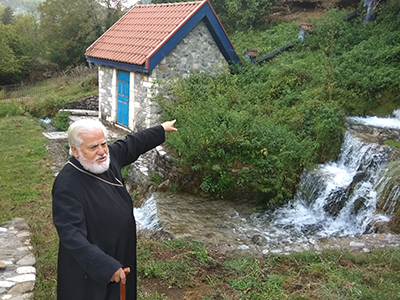
“We utilize the water flow which springs on the monastery’s land. The plant has a capacity of 12kW and we use the generated power for the monastery’s facilities“ says Abbot Raphael.
He points out that the monastery itself financed the project having obtained all the necessary permits from the authorities. However the government doesn’t subsidise the project. “There was another plant erected during WW2 bellow the present one and the water mill. The partisans had a command post there. The plant was operating until after the war while its turbine is now stored in the school”. The mini plant generates 60,000 kW a year and is connected to the power grid- says the abbot. At the end of each year the monastery’s electricity bill is deducted for the amount of electricity that the power grid gets from the mini plant.
Recently it was reported that the Diocese will build another mini plant near the Moraca Monastery but Abbot Raphael says that for the time being “it’s just an idea” because they are out of money.
Serbian revolt against the new generation of rogue lords
The population around the Old Mountain in Serbia staged a large scale revolt last week over the plan to build no fewer than 50 hydropower plants in the area. The public discontent spread to the Lim River area, Rzava and other adjacent places. The regime controlled media deliberately ignored the news and kept reporting about the “historic” visit of President Aleksandar Vucic to Kosovo.
In 2013 the Serbian government approved locations for 120 companies which will build hydropower facilities. The Land Registry Office designated 870 locations for small hydro plants. The overall capacity of those plants will be under 1% of the overall electricity production.
Dr Ratko Ristic is the dean of the Faculty of Forestry in Belgrade who sent an open letter to the Pirot City Council. Pirot’s vicinity is designated a building area for small hydro plants. Dr Ristic warned that small hydropower plants are very controversial saying that “There are serious debates in the European Parliament about the accomplishments of small hydropower, especially in protected mountainous areas. The power plants cause adverse effects to the environment, especially in the alpine regions of Austria, France, Italy and Germany. Most complaints are related to ecosystem degradation, fragmentation of fish habitats and increased level of erosion. The European Commission issued an order to Romania to review the small hydropower sustainability concept. The country erected over 500 facilities in a short period of time and has thereby harmed its mountainous aquatic ecosystems. It is proposed to remove tariff incentives for the electricity produced in small hydro plants and to let them operate in the open market terms. It is highlighted that small hydro plants generate small quantities at the expense of rising environmental costs“.
Professor Ristic commented in the interview for NIN magasine that the construction of 8 small hydropower plants in Albania, Croatia and Macedonia caused the extinction and/or endangerment of unique and protected fish species. It also caused water supplying problems to local communities and road-related intense soil erosion. He pointed out that the only beneficiaries of those projects would be investors, suppliers and corrupt government officials.
The main investors in Serbia are people close to the regime. The best known example is Nikola Petrovic, the best man of President Aleksandar Vucic. Sadly the same pattern of entrepreneurship is seen elsewhere in the Balkans.
Predrag NIKOLIĆ


 English
 Facebook
 Youtube
 X (Twitter)
 Instagram
2023, Centar za istraživačko novinarstvo CG - Sva prava zadržana