
MONTENEGRO’S HIGH RISK TRANSIT: Questions Swirl Around Diverted Waste Shipment
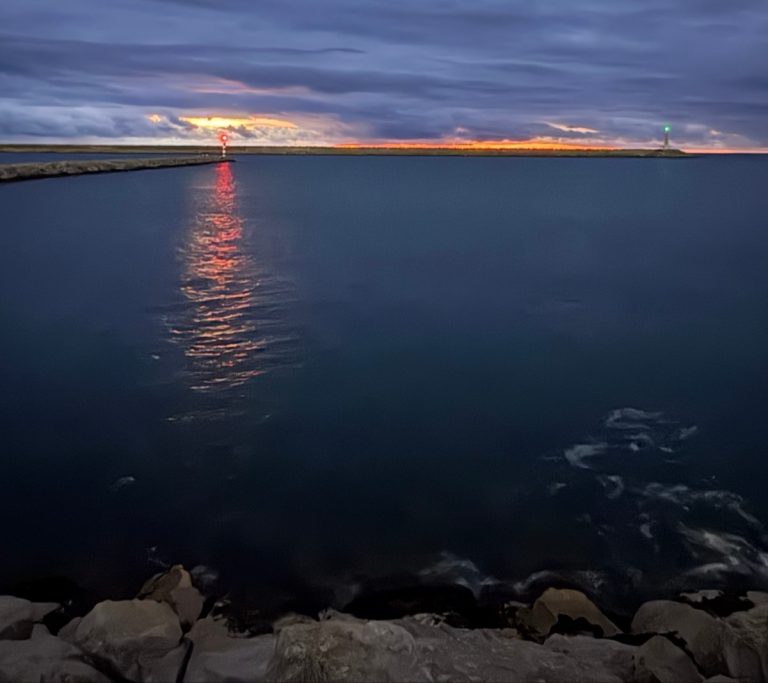
Two thousand tons of waste bound for Libya left the Port of Bar in 2024 without proper documentation or inspection by government officials, on a vessel flying under one of the most sanctioned flags in maritime law, according to a CIN-CG investigation. The shipment, which was diverted to Turkey at the port, raises questions about how often Montenegro still allows poorly documented waste to cross borders without the environmental oversight and traceability required under European Union standards.
Tijana Lekić
In April 2024, Montenegro’s Environmental Protection Agency granted Budva-based import-export company Eko Modus a permit to transfer 1,000 tons of non-hazardous metal waste from Bosnia and Herzegovina through Montenegro to the Port of Bar, where it would be loaded onto cargo vessels and deposited somewhere in Libya.
The permit did not identify a final recipient, nor was the shipment inspected by the environmental authority responsible for verifying the type of waste. Moreover, official records later showed that only 350 tons of metal waste entered Montenegro– while nearly 2,000 tons left the Port of Bar on a Tanzanian-flagged vessel bound for Turkey.
These gaps in oversight are not only a sign of regulatory weakness; they pose an immediate risk to public health and the environment. Presently, Bosnia and Herzegovina is preparing to sell and export surplus weapons and ammunition from the 1995 war, increasing the danger that metal waste could be used to conceal illegal shipments of weapons. And in 2019, under a similar EPA permit, Montenegro allowed thousands of tons of toxic waste to be sent to Ukraine and Spain under false documentation.
According to the 2024 Eko Modus EPA permit, which is published on the agency’s website, the Libya shipment consisted of non-hazardous metal materials made of iron and steel from exporter M.Z. Company d.o.o., a scrap dealer from Mostar, BiH; while the waste importer is listed as an intermediary company in Libya called “Beaini General Trading Co srl.”
A CIN-CG analysis of waste transit records over the past three years shows that permits usually contain precise information about the companies that are the final importers. In an unusual omission, however, the Eko Modus permit only identifies the final importer as “Libya”-- a country with two rival governments.
Furthermore, the transit record that Eko Modus submitted to the EPA in its permit application identifies the company as Lebanese, not Libyan; with a slight difference in the spelling of its name (“Beaini General Trading Co s.a.r.l.)”. It lists the Lebanese company as an intermediary, but not the final recipient of the waste. Again, the final importer is simply “Libya.” This document, obtained by CIN-CG under the Law on Free Access to Information (FAI), accompanies the cargo through Montenegro for inspection by customs officials.
Libya is a country divided between two administrations, which occasionally engage in armed conflict. Under the Waste Management Act, Montenegro allows the transit of waste to that country without precise information about which administration is the final recipient, which company takes over the cargo, and how the waste will be treated after entering Libya.
350 TONS OF METAL ENTERED MONTENEGRO, NEARLY 2,000 TONS LEFT THE COUNTRY FOR PARTS UNKNOWN
While Eko Modus had a permit to transport 1,000 tons of waste from BiH through Montenegro, customs officials at the Vraćenovići border crossing only recorded 350 tons of waste entering the country in 2024, according to an email statement from the Montenegrin Customs Administration (CU).
This would correspond to approximately 15 standard trucks. However, a significantly larger amount of cargo — as much as 2,000 tons — was loaded at the Port of Bar.
Once at the port, “the goods were stored at an appropriate terminal — the open storage area of Obala Volujice AD,” the statement continued. “Nearly 2,000 tons of scrap iron were shipped by vessel, which the free zone user placed within the free zone area.”
The agency confirmed that Beaini General Trading has been operating in the Port of Bar Free Zone since 2020, when it first obtained permission to carry out activities relating to the storage, trade and export of scrap metal, according to CU.
Citing the export declaration, CU then revealed that the metal waste had been loaded onto the Lebanese-owned Star Light, which was flying the Tanzanian flag. The port of discharge is recorded as Hekere, Turkey. An invoice in the amount of EUR 573,763.20 was attached to the export declaration.
NO EXPLANATION
The Customs Administration (UC) did not answer CIN-CG’s question as to how the 350-ton shipment of metal waste grew to nearly 2,000 tons under the same permit.
Neither the EPA nor the Customs administration knew who received the waste in Turkey, or whether the cargo ended up in Libya as stated in the permit and shipping documents. Eko Modus and Beani General Trading Co. refused to answer CIN-CG’s questions.
The Customs Administration denied CIN-CG’s request to view the export declaration signed at the Port of Bar, citing the Customs Service Act. According to the agency, declarations and information on the value of goods constitute an official secret under the Customs Service Act.
The missing information regarding this shipment — along with its diversion on a high-risk Tanzanian vessel, mystery waste, and lack of inspection by port officials — raises questions about the transparency and safety of this cargo.
NOT POSSIBLE IN THE EUROPEAN UNION
A combination of regulatory gaps, legislation not yet aligned with European Union rules on waste transport, as well as the specific regime of the Free Zone at the Port of Bar, allowed such documentation to be treated as formally acceptable. Under stricter standards, such as those applied in the European Union, a permit without the signature of the final recipient would not be considered valid.
The EPA was unaware that the waste ended up in Turkey, according to Danilo Veljić, an independent advisor in the agency’s permitting department. Based on the Eko Modus permit application, Veljić told CIN-CG, the agency believed the waste would end up in Libya.
Since Montenegro is a transit country, Veljić continued, the EPA does not have jurisdiction to verify the final recipient of the waste in Libya, nor the procedures for processing and disposal of the waste in the destination country. He says the permit was issued in accordance with the Waste Management Act that was in force at the time.
EU regulations pertaining to waste transit are stricter. Since Libya is not a member of the Organisation for Economic Co-operation and Development (OECD), cross-border shipments of waste to that country are subject to additional rules.
According to Regulation (EC) No 1013/2006 and the new EU Regulation 2024/1157, waste cannot be shipped to non-OECD countries without completing a full prior notification procedure and obtaining written consent from the importing country, known as Prior Informed Consent (PIC).
Furthermore, ships flying the Tanzanian flag are on the Black List of the Paris Memorandum of Understanding on Port State Control (Paris MoU) and are classified as “very high risk” due to persistent safety and labor issues, as well as fraudulent vessel registration. When they enter any port within the Paris MoU region (which includes almost all European countries), these ships are automatically subject to enhanced inspections — and are frequently detained due to non-compliance.
In this case, however, such controls were absent. This is not unusual in Montenegro. According to the Customs Administration, once officials at the Port of Bar Free Trade Zone verify that the vessel is a client of the zone, they do not consult the blacklist or perform additional inspections. The country whose flag the ship flies is responsible for the vessel’s technical and safety oversight.
Montenegro's Ministry of Ecology, Sustainable Development and Northern Region Development (MERS) is responsible for harmonizing domestic legislation with European Union (EU) directives in the area of cross-border waste shipments.
When asked when they plan to introduce EU directives, MERS responded that by-laws are being prepared that will fully transpose EU legislation in the field of cross-border movement of waste.
“MERS considers the permit to be legal and legitimate, since Montenegro is a transit country and the shipment is accompanied by a form signed by the final recipient of the waste,” the department headed by Damjan Ćulafić told CIN-CG.
However, the permit was not signed by a final recipient; only Saša Vučetić, director of the Montenegrin import-export company Eko Modus.
As for the shipment’s diversion to Turkey, MERS told CIN-CG that customs authorities at the Port of Bar are responsible for confirming that waste leaves Montenegro for the country listed in the permit as the next destination.
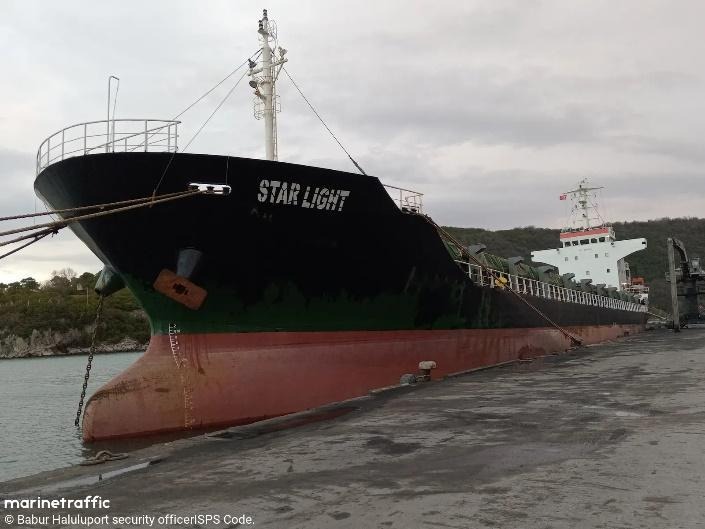
Star Light source Marine Traffic author Babur Haluluport security officer, SPS Code. https://www.marinetraffic.com
CONTROLS BELOW MINIMUM STANDARDS: WHAT IS HAPPENING WITH THE TRANSIT OF METAL WASTE?
Business registers in Bosnia and Herzegovina show that the Bosnian scrap dealer M.Z. Company is owned by Merhid Zlomušica. According to its website, the company specializes in the purchase and recycling of secondary raw materials of metal origin.
Zlomušica’s company is registered under the laws of Bosnia and Herzegovina as an authorized operator for secondary raw materials of metal origin. The BiH Rulebook on Waste Categories defines the methods for classifying hazardous and unidentified waste, and places the obligation of classification on the waste producer. In international trade, the role of the producer is assumed by the exporter — in this case, M.Z. Company.
As an authorized operator, the company is entitled to export metal waste classified as non-hazardous under significantly simplified conditions, without the need for an export permit from the Federation of BiH. The key condition for using this simplified regime, however, is the existence of evidence on the origin and properties of the material.
M.Z. Company refused to answer numerous questions from CIN-CG, including those concerning the origin and properties of the metal.
Montenegro’s Department for Environmental Inspection, which is responsible for controlling this type of waste, did not inspect this shipment.
In Montenegro, Environmental Inspection is legally responsible for verifying the type of waste and overseeing the handling of waste. However, there are only eight environmental inspectors in the entire country; as a result, there is no automatic mechanism that ensures every waste shipment in transit is physically inspected by the Environmental Inspection.
Instead, according to the department’s chief coordinator, Vesna Bigović, inspection of cross-border waste movement is carried out exclusively at the request of the border police or officers of the Customs Administration.
“The Environmental Inspection is not present at border crossings and does not carry out controls at the crossings themselves,” Bigovic explained.
After the trucks departed Bosnia and Herzegovina, the shipment passed through two customs controls — at the Vraćenovići crossing, and at the Port of Bar. The Customs Administration explained to CIN-CG that at the Vraćenovići border crossing, clearance was conducted on the basis of the Eko Modus transit documents.
“When entering the free zone of the Port of Bar, the trucks carrying scrap metal were weighed on the weighbridge of Port of Bar AD, and certificates of completed weighings on the truck scale were issued. No irregularities were observed in the declared weight of the goods. The goods were in bulk form. It was observed that the cargo consisted of metals classified as scrap iron.”
INTERMEDIARY COMPANIES WITH NO FUNCTIONAL COMMUNICATION CHANNELS
During the investigation, CIN-CG unsuccessfully attempted to contact the user of the Port of Bar Free Zone from Lebanon, Beaini General Trading Co. No company email address could be found online, while the EPA permit contains a Montenegrin phone number which is currently out of service, and an email address from which messages are returned undelivered.
Under the current Free Zone Act, zone users are not required to have a registered company in Montenegro. Regardless, Nidal Beaini also registered a company in Podgorica called “Beaini General Trading Co” in 2019, which engaged in recycling sorted waste. The company has no contact email or authorized representative listed in public registers, nor could CIN-CG locate this information in a subscription-based business directory. There is one active Montenegrin phone number; CIN-CG placed numerous calls to this number over the course of a week, leaving messages, but never received a response. Through the public directory, CIN-CG established that the number is registered to an individual from Nikšić.
Beaini’s Podgorica-based company has been financially blocked since 2022 with an outstanding debt of EUR 1,577. No business activity has been recorded on the “Business Network” platform over the past three years.
The permit application was signed by Eko Modus director Saša Vučetić, and the phone number listed on the form belongs to Danijela Vučetić, an authorized company representative. When contacted by CIN-CG, Vučetić provided two email addresses for the Lebanese company.
CIN-CG received no response to messages sent to either of these email addresses.
Although “Eko Modus” is listed in the EPA register of waste transporters for 2024, the transit documentation accompanying the shipment identifies another company, “Loyal d.o.o.”, as the company responsible for transporting the waste from Bosnia and Herzegovina to the Port of Bar.
At the time of first publication, Loyal d.o.o. had not responded to CIN-CG’s questions. Afterwards, the company reached out to CIN-CG emphasising that they were not the EPA permit-holders– and had only carried out transport for Eko Modus on one occasion, involving a shipment of only approximately 25–26 tons on the Bosnia and Herzegovina – Port of Bar route.
WHAT ARE THE RISKS?
In October 2025, in the Italian port city of La Spezia, employees at a recycling facility uncovered remnants of explosive devices while sorting bales of plastic and metal waste which had been misclassified as “non-hazardous waste.” This is just one of the most recent cases in a country where there is extensive discussion about problematic waste smuggling.
Furthermore, lack of controls around metal waste originating from Bosnia and Herzegovina is particularly concerning given the country’s preparations for the sale and export of surplus weapons, ammunition and land mines dating back to the 1995 war.
CIN-CG noted that tenders related to weapons are not publicly available. Additionally, CIN-CG did not receive responses from the relevant BiH ministries regarding the export procedures.
M.Z. Company is registered as a metal collector, but nowhere is it stated whether it holds a license for processing weapons. CIN-CG sent this company questions regarding the origin of the metal, possible permits, and other related issues, but M.Z. Company did not provide any answers.
The lack of public oversight shown in this Eko Modus shipment also recalls a disastrous 2019 case in which thousands of tons of toxic waste materials were shipped from Montenegro to Ukraine and Spain, after being cleared by the EPA under documentation declaring them as non-hazardous waste. In that case, according to testing by Ukraine’s Ecological Ministry, the heaps of toxic waste shipped to the Black Sea port contained known carcinogens as well as chemicals that lead to birth defects.
CIN-CG spoke with PolieCo, the Italian national consortium responsible for the collection, monitoring, and proper management of polyethylene-based plastic waste, particularly that reused in industry. The consortium’s goal is to prevent waste from being misclassified and illegally diverted, and to ensure environmental protection by controlling the entire lifecycle.
“I would like to emphasize two important points. In the Mediterranean, it is necessary to harmonize the work of all institutions,” Claudia Salvestrini, consortium Director, told CIN-CG. She stressed that shipments of waste in particular are most likely to evade controls, especially during periods of international tension and conflict, to the serious detriment of public health and the environment.
“This [Eko Modus] case confirms that, while there appears to be strong control at the borders, a great deal still slips through — perhaps too much.”
PolieCo has access to system data and issues — statistics, reports, and examples of abuse. PolieCo maintains internal records of companies, shipment patterns, and past cases of waste misclassification and irregular cross-border movements. This database allows the consortium to recognize recurring actors, and to place new violations within a broader pattern of previously documented abuses.
She also stressed that it is important for institutions in Montenegro to act transparently, as everything is happening right next to Italy’s borders — practically just around the corner.
Leave a Reply

 English
 Facebook
 Youtube
 X (Twitter)
 Instagram
2023, Centar za istraživačko novinarstvo CG - Sva prava zadržana